
 Image 1 of 27
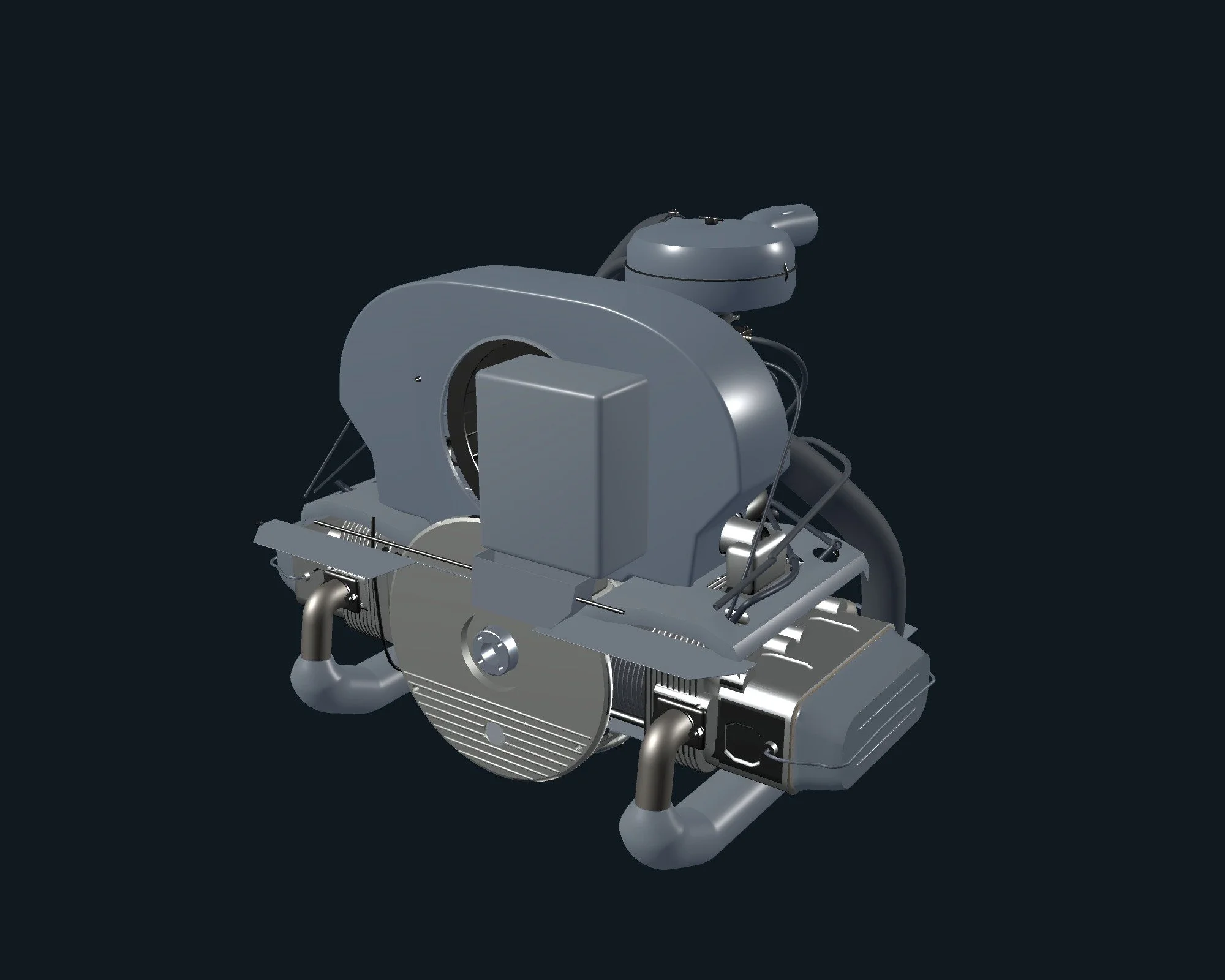 Image 2 of 27
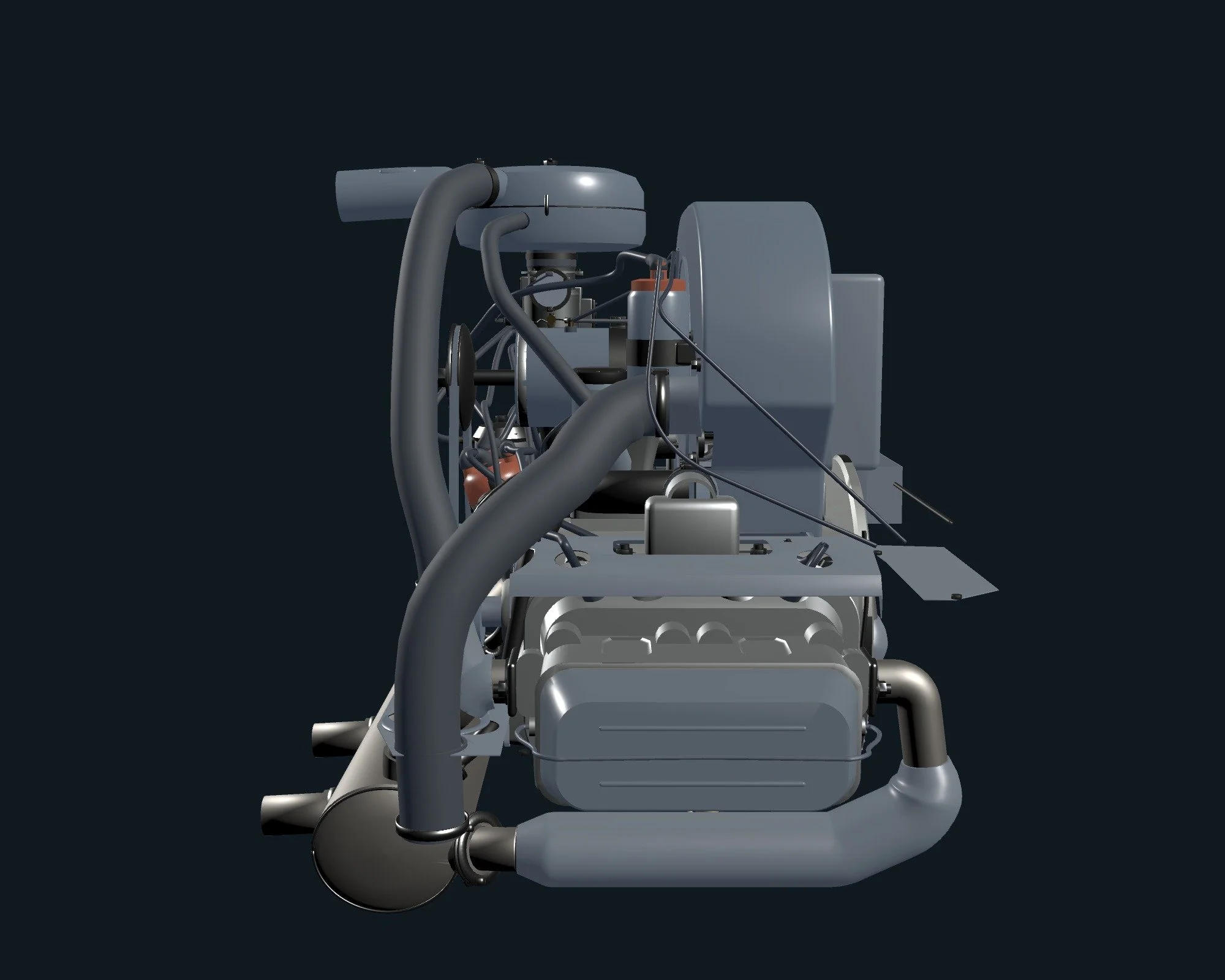 Image 3 of 27
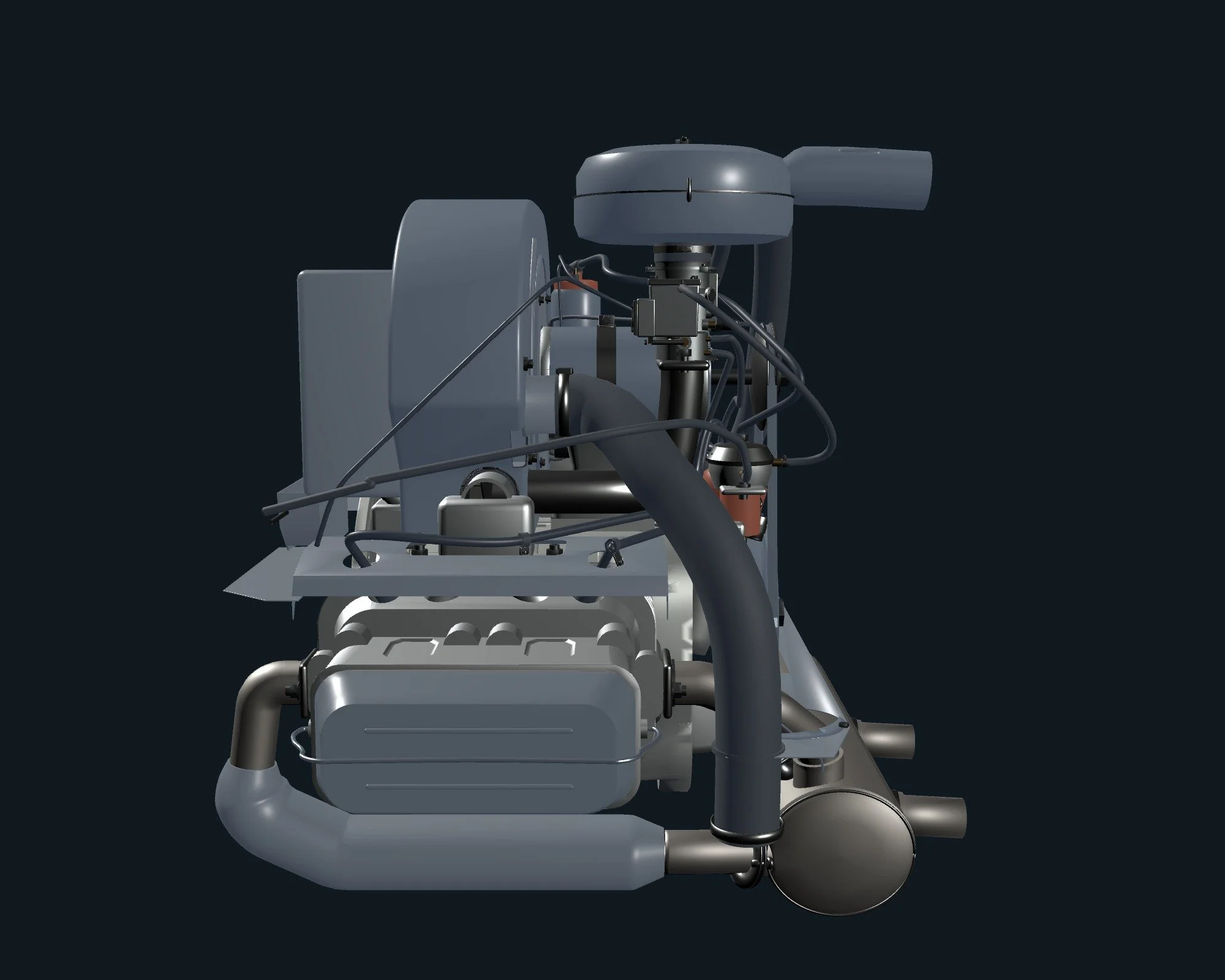 Image 4 of 27
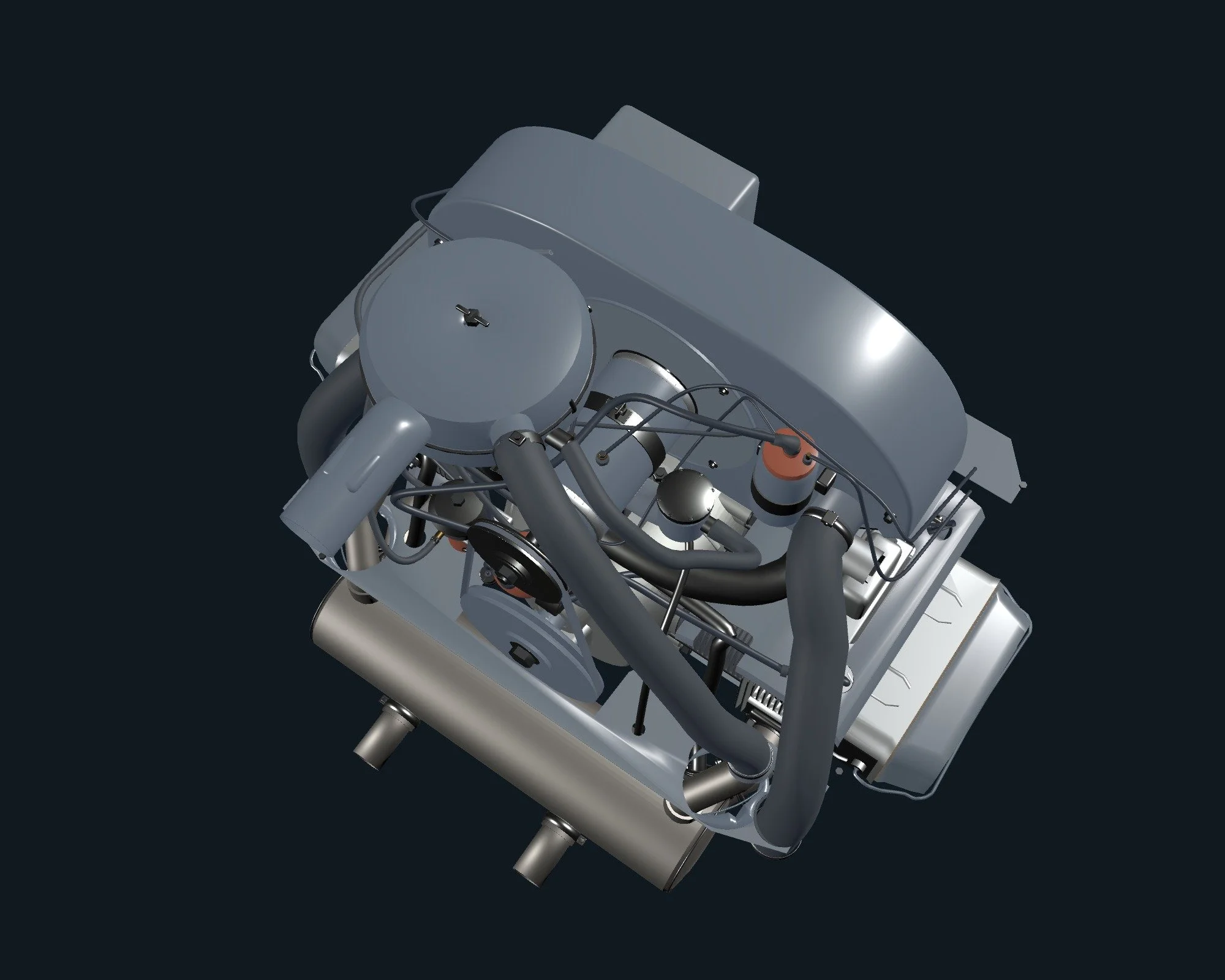 Image 5 of 27
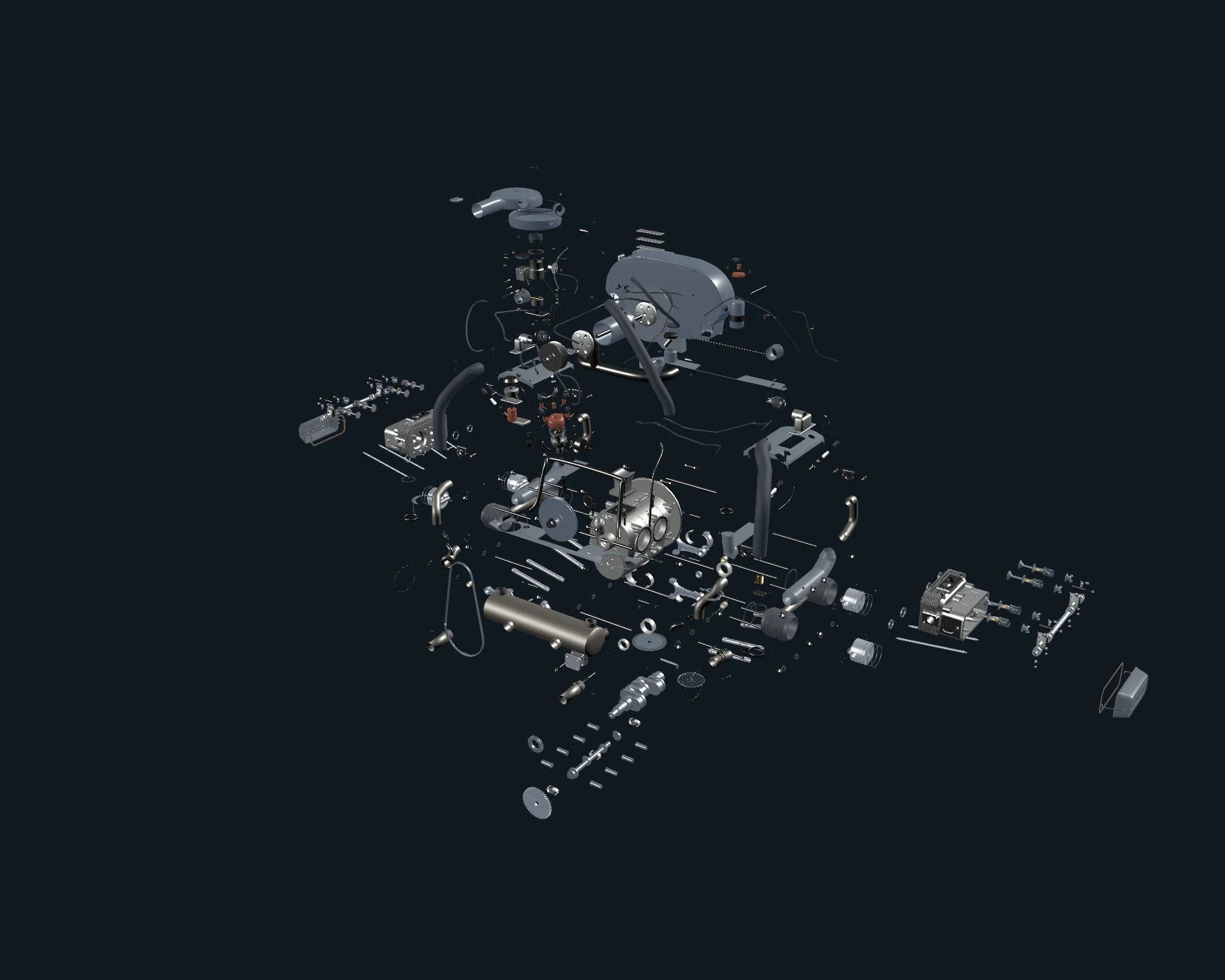 Image 6 of 27
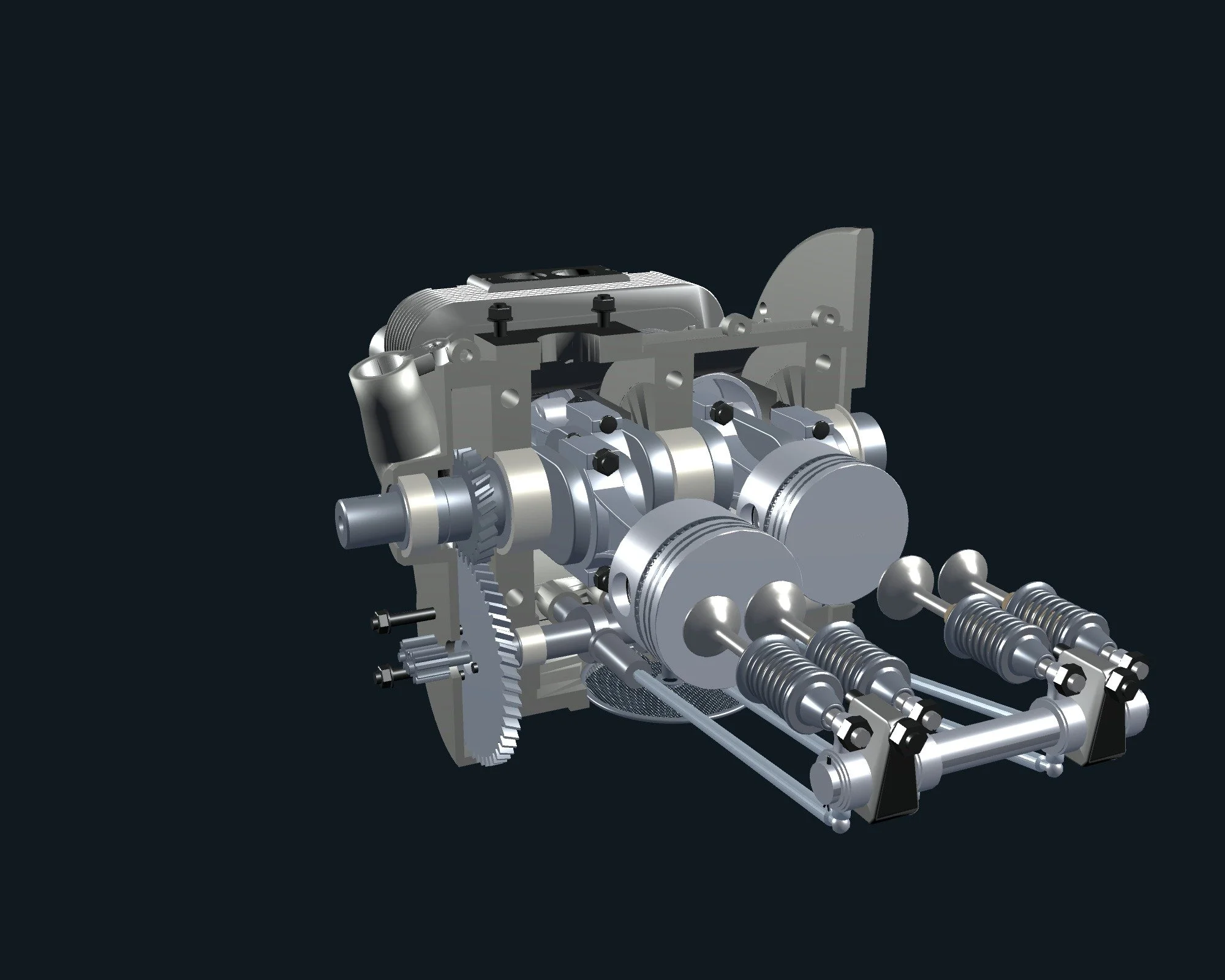 Image 7 of 27
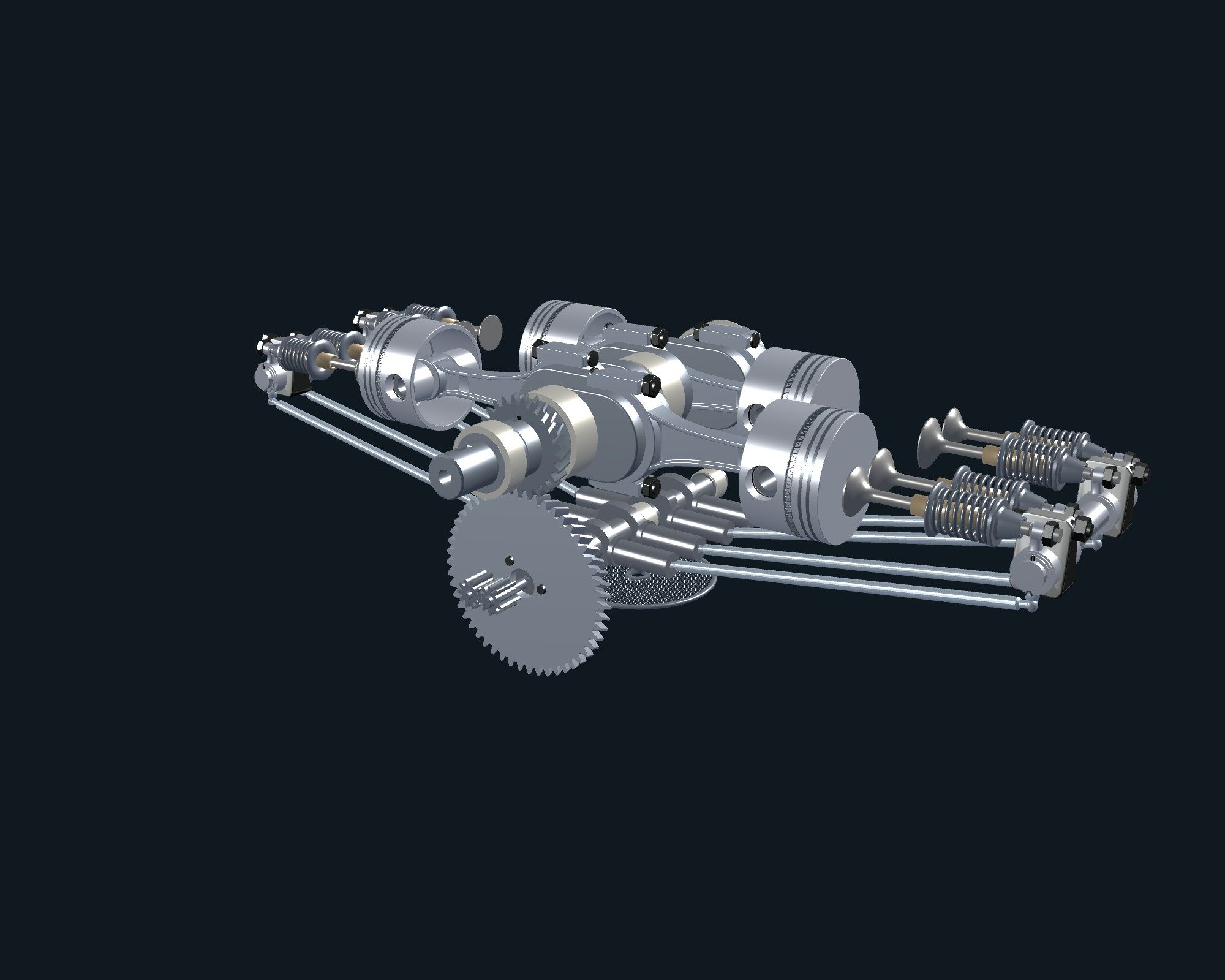 Image 8 of 27
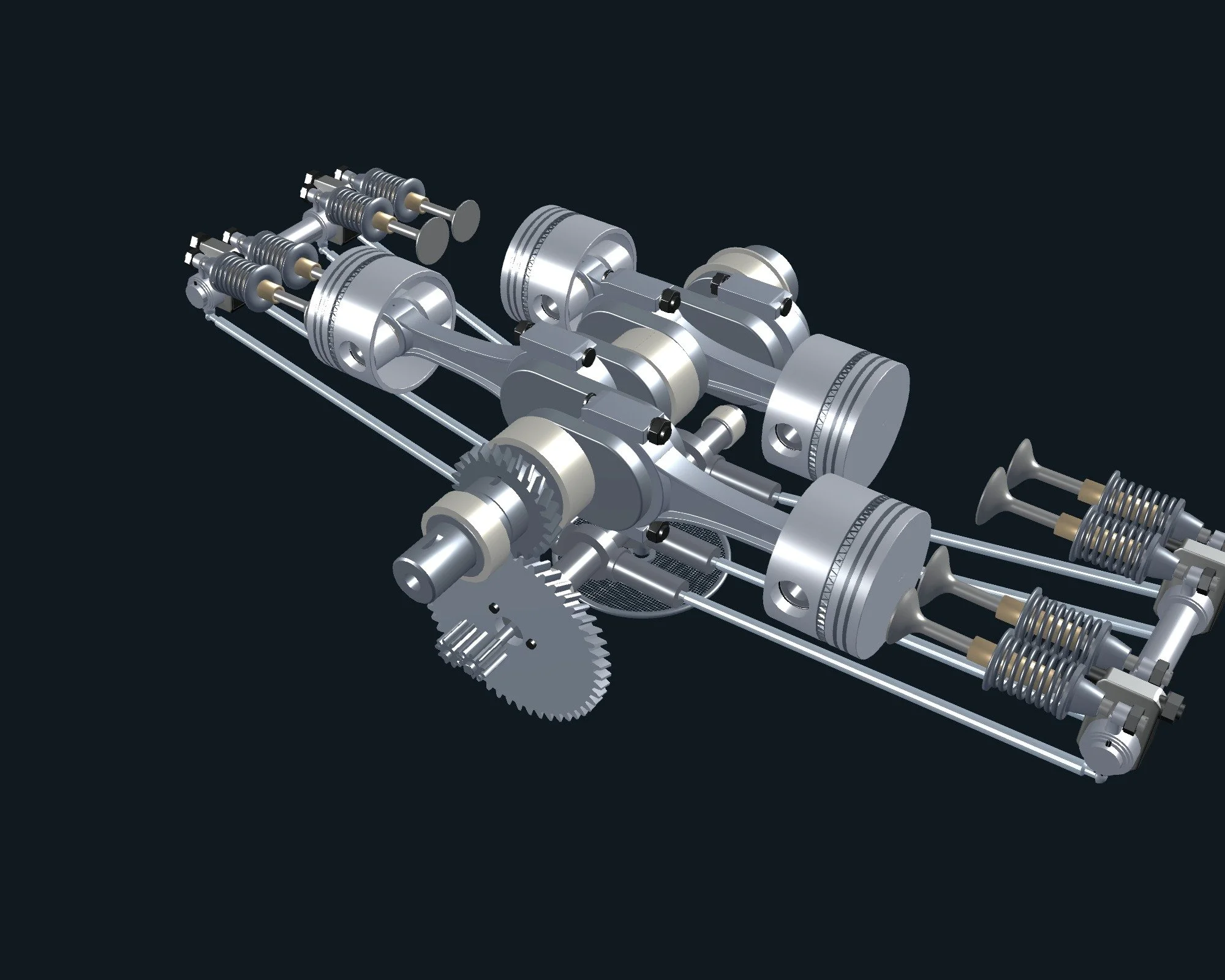 Image 9 of 27
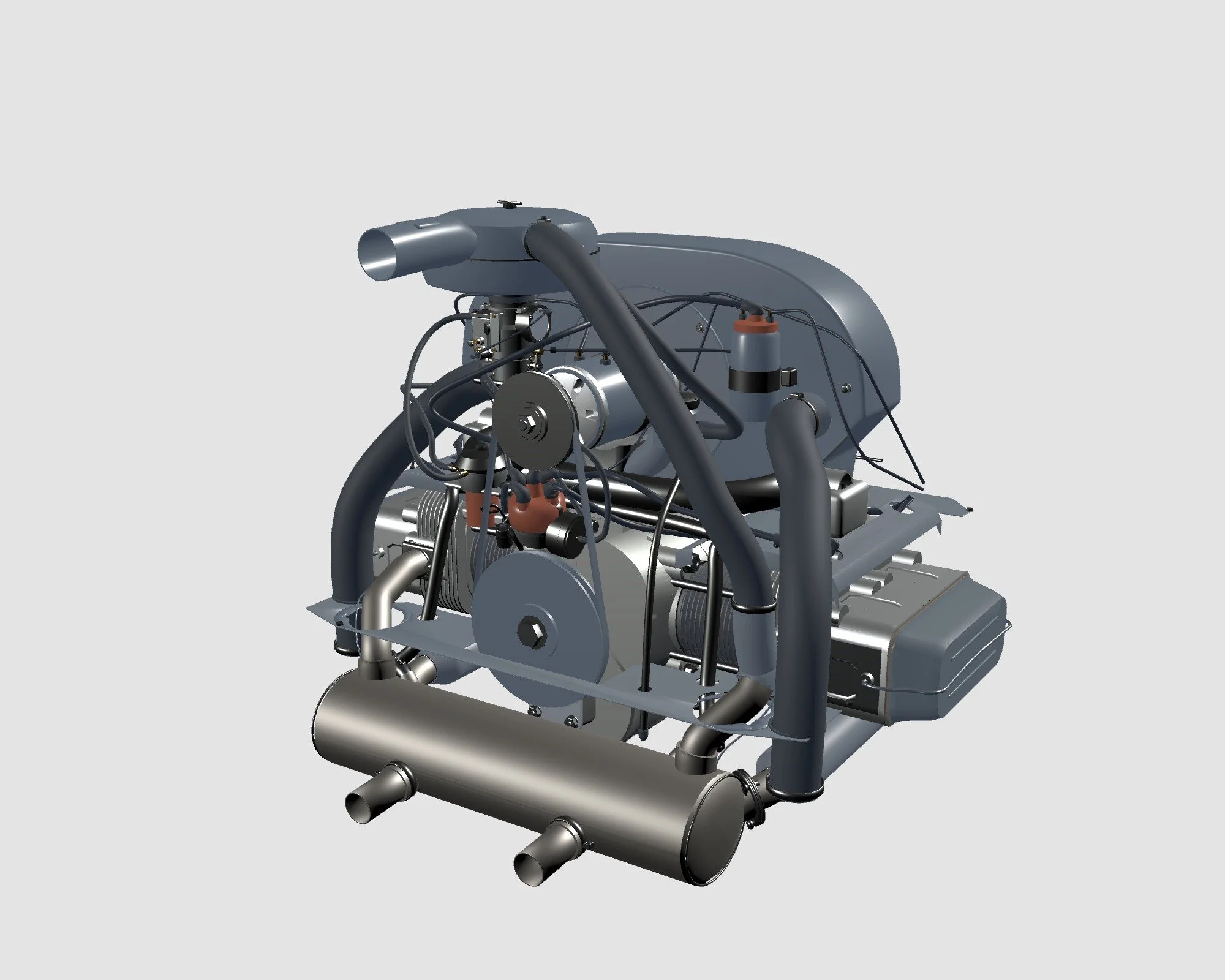 Image 10 of 27
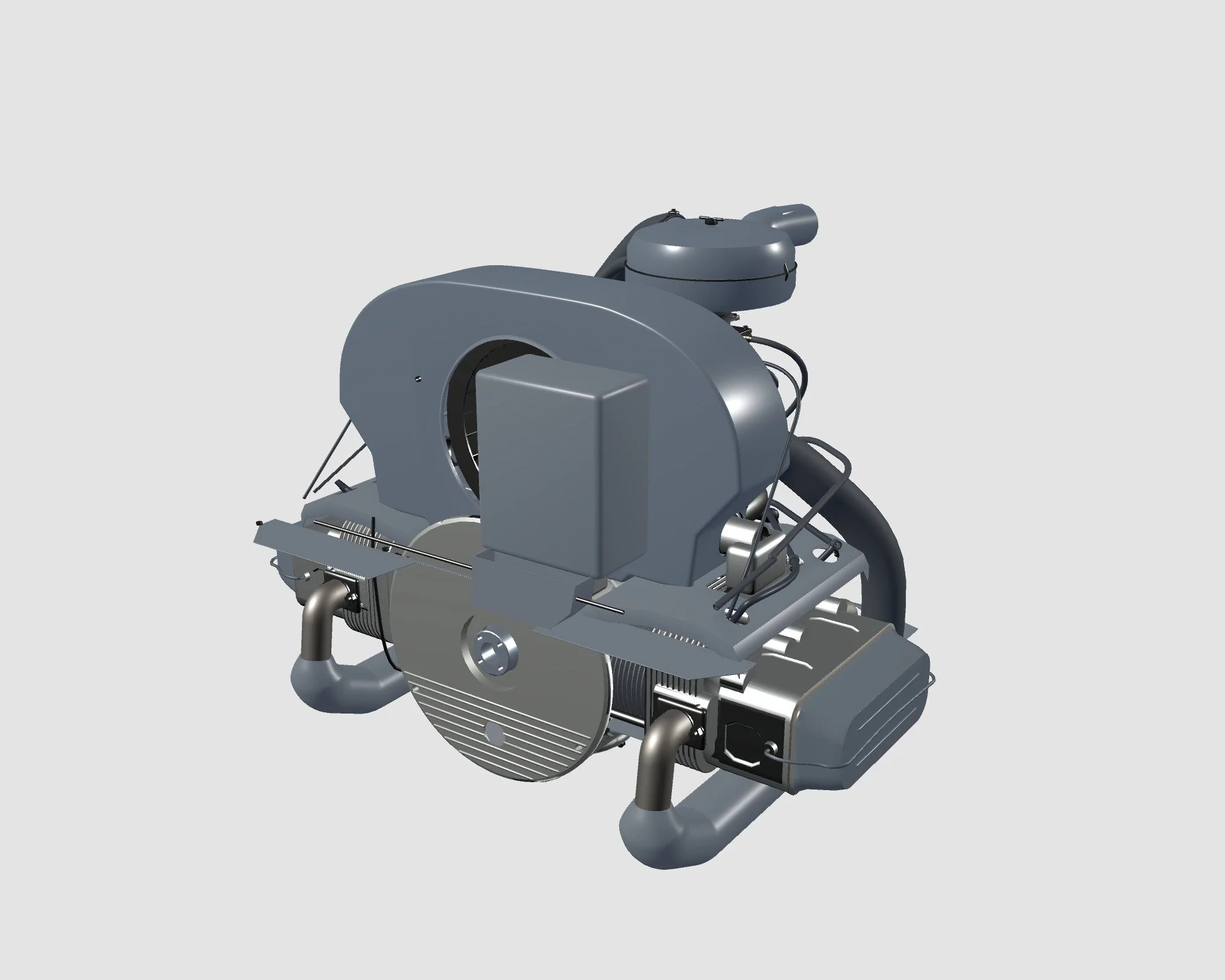 Image 11 of 27
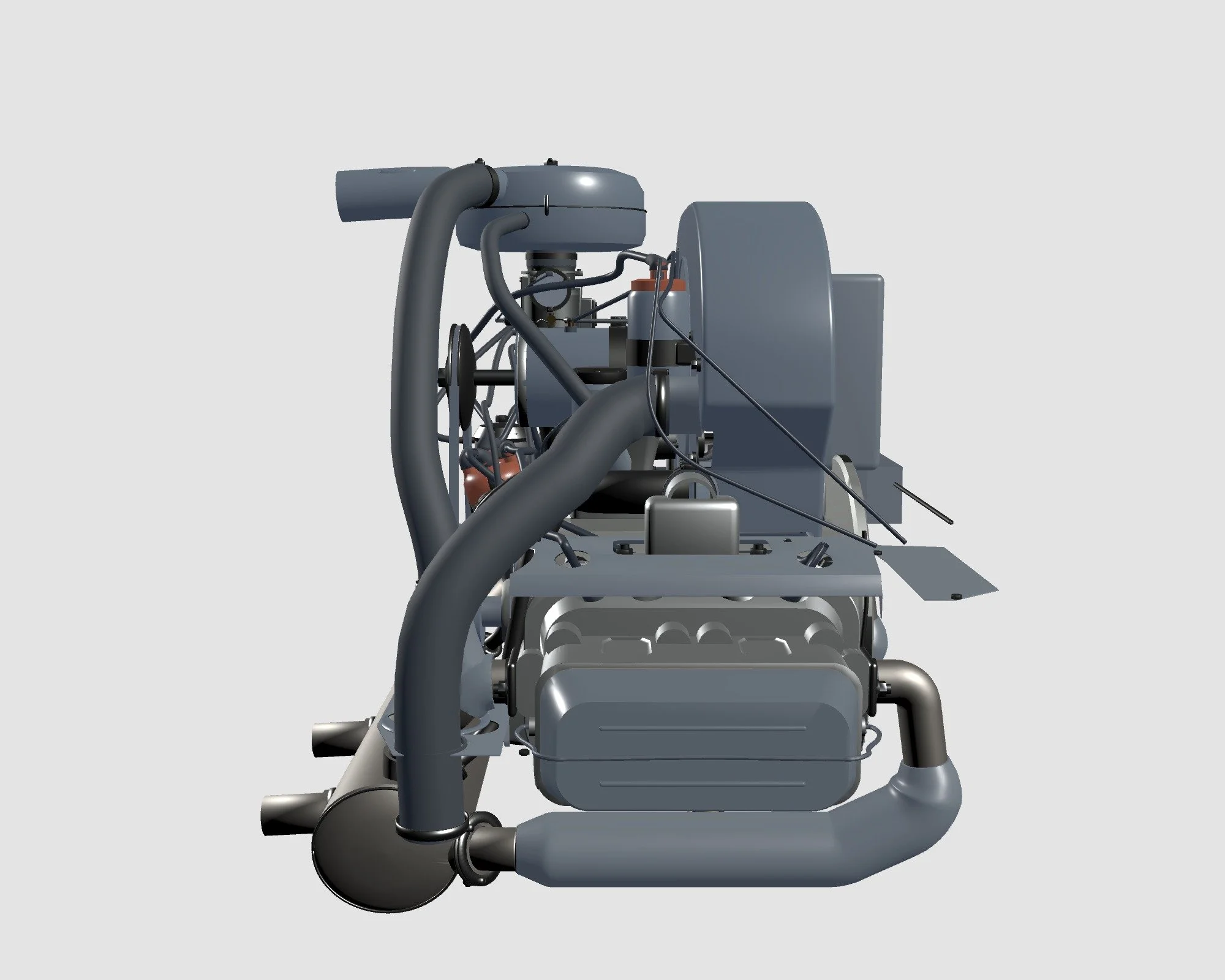 Image 12 of 27
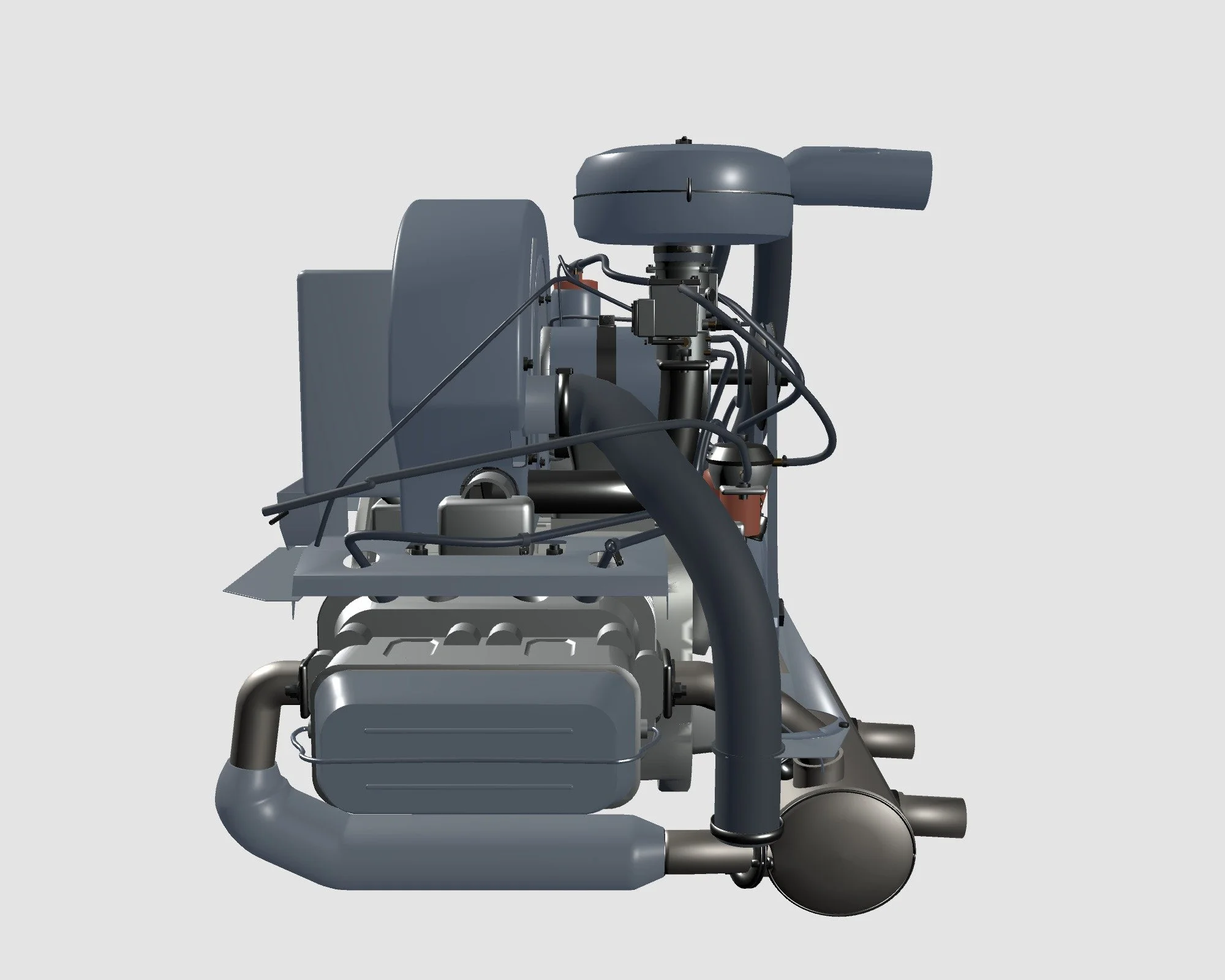 Image 13 of 27
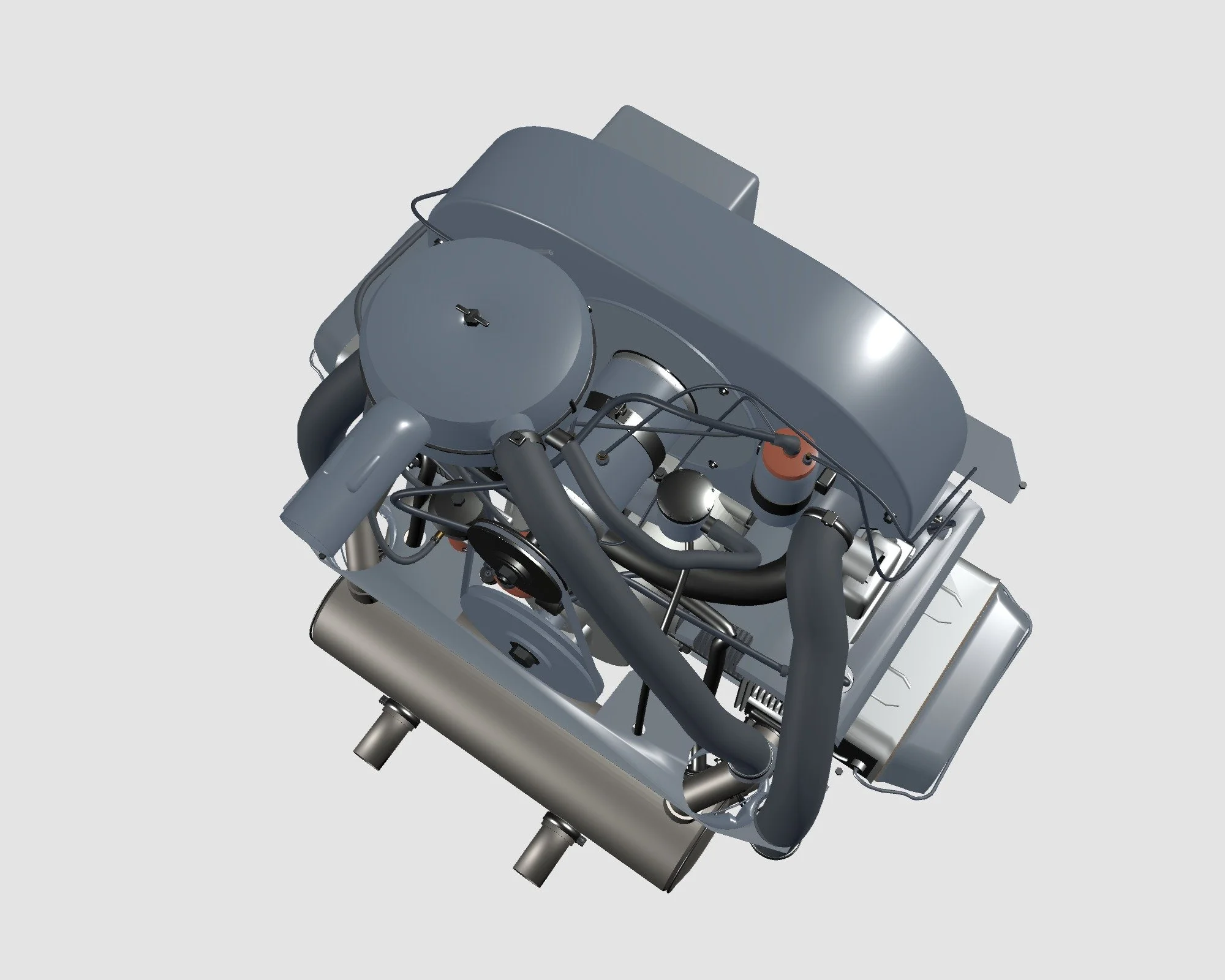 Image 14 of 27
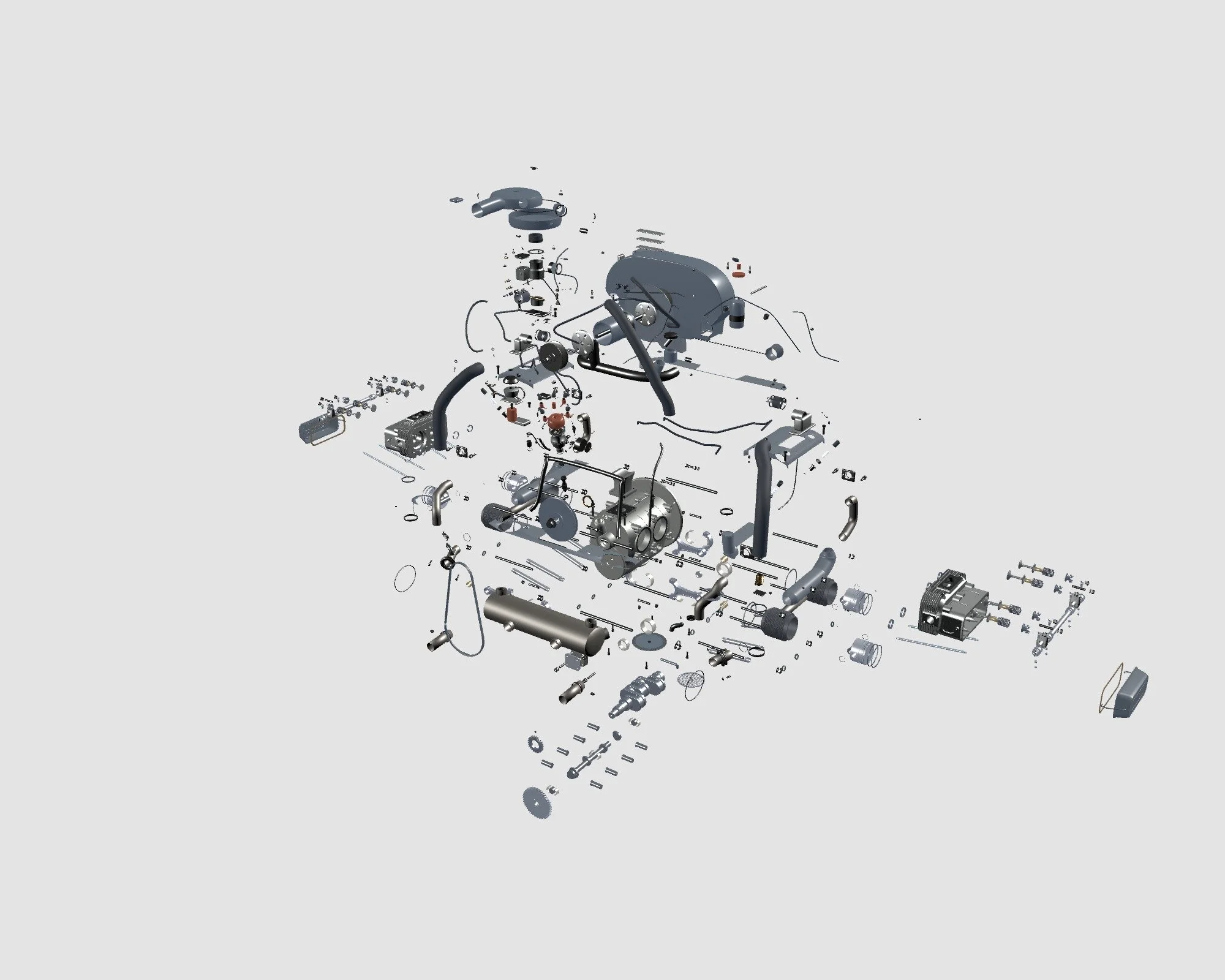 Image 15 of 27
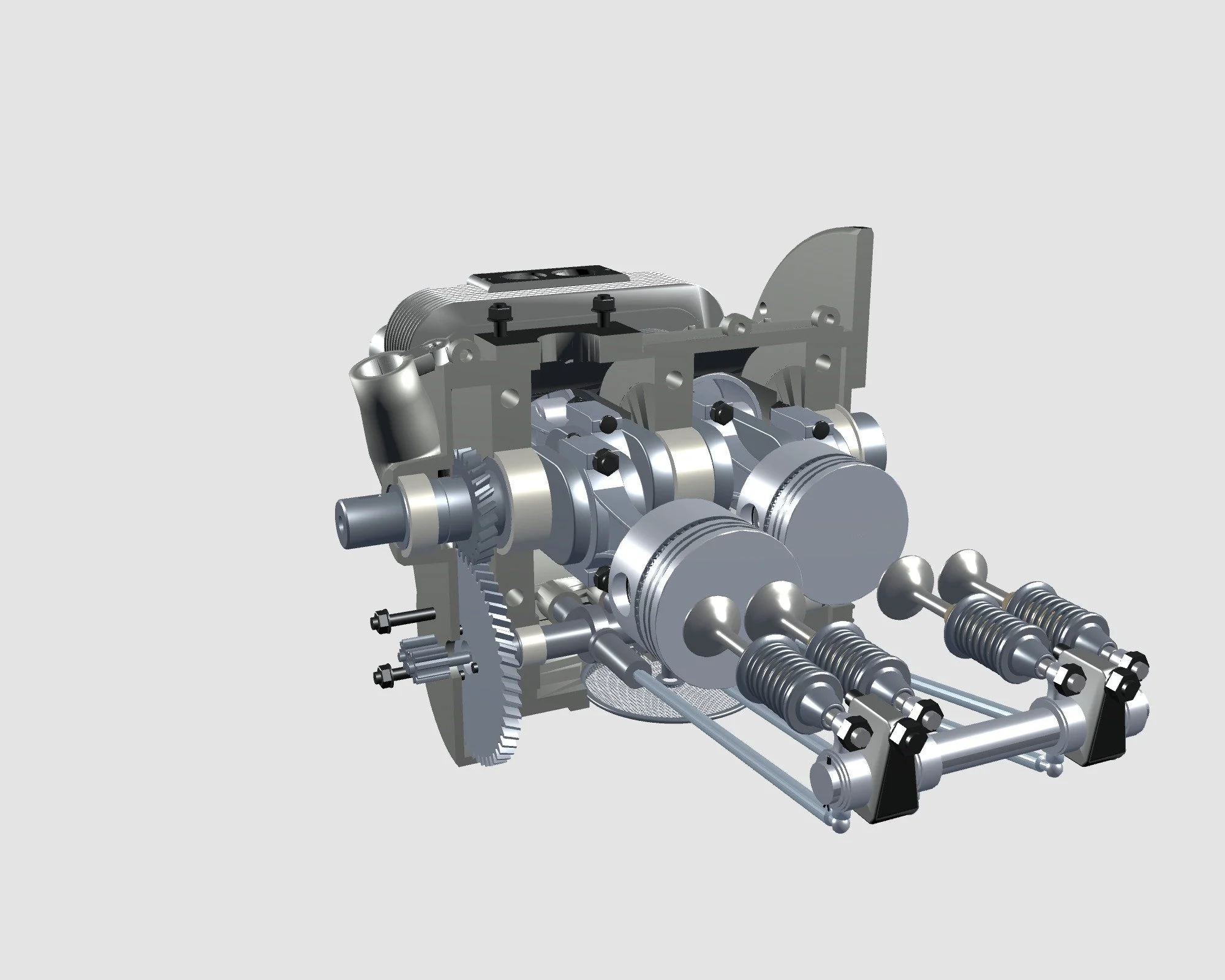 Image 16 of 27
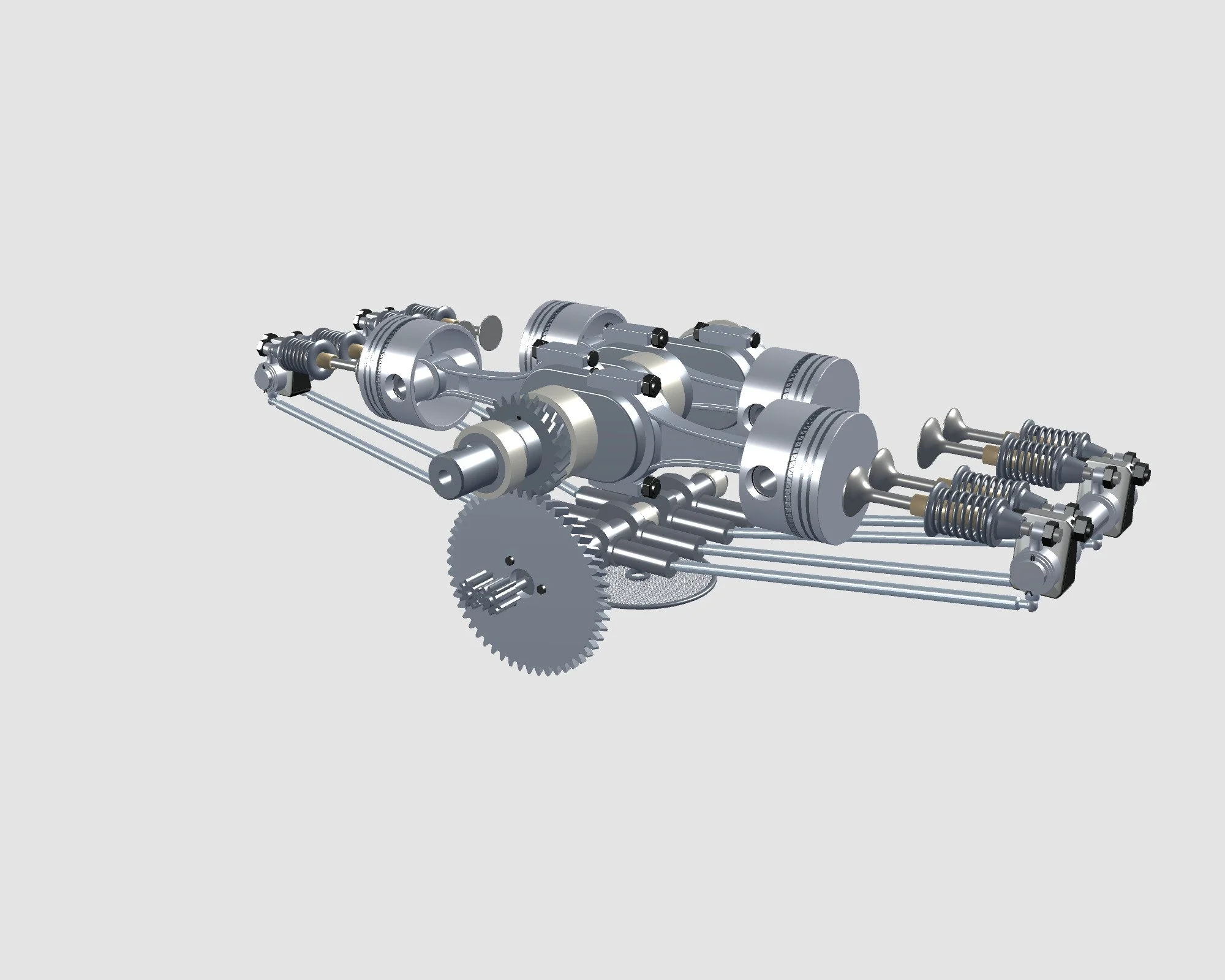 Image 17 of 27
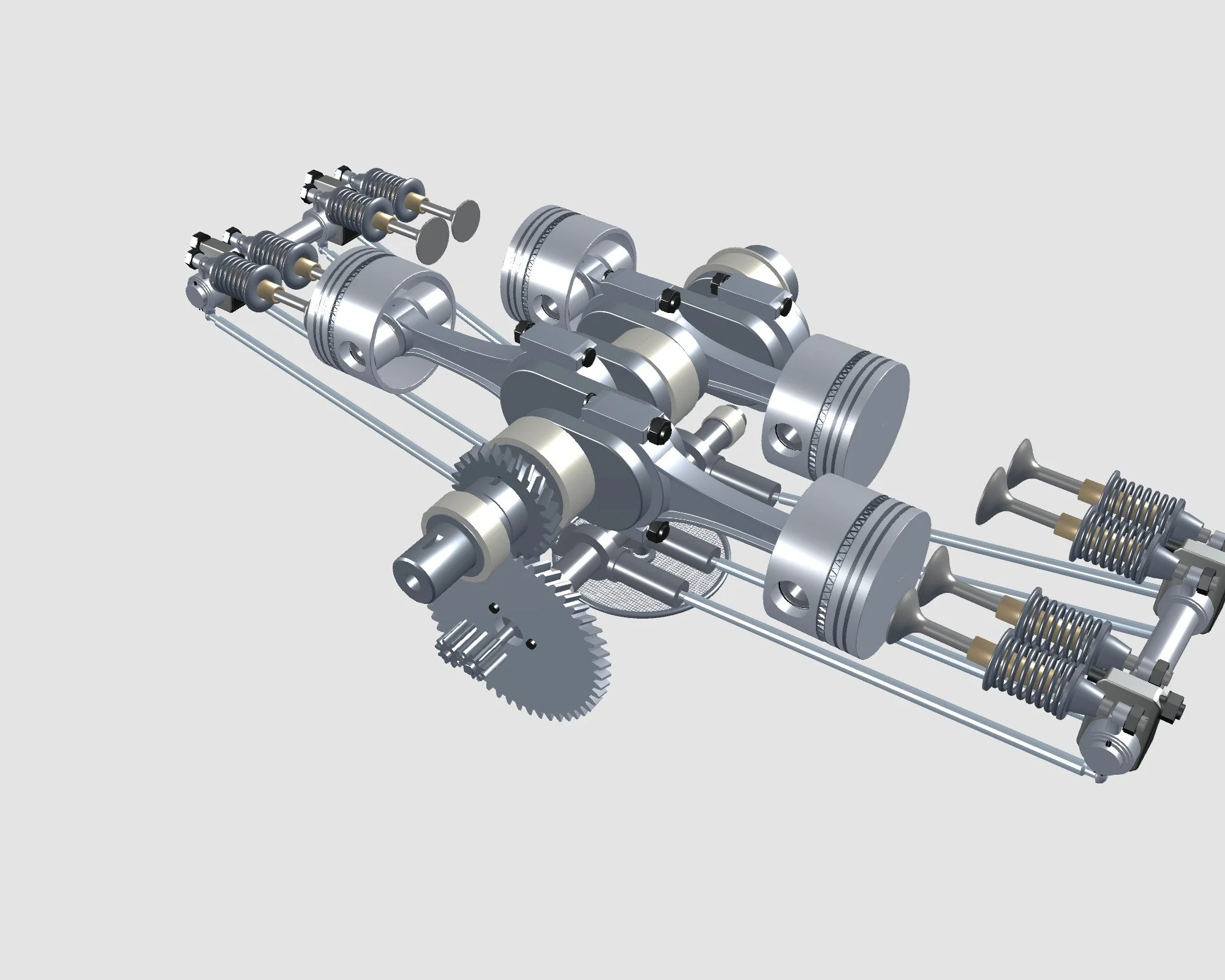 Image 18 of 27
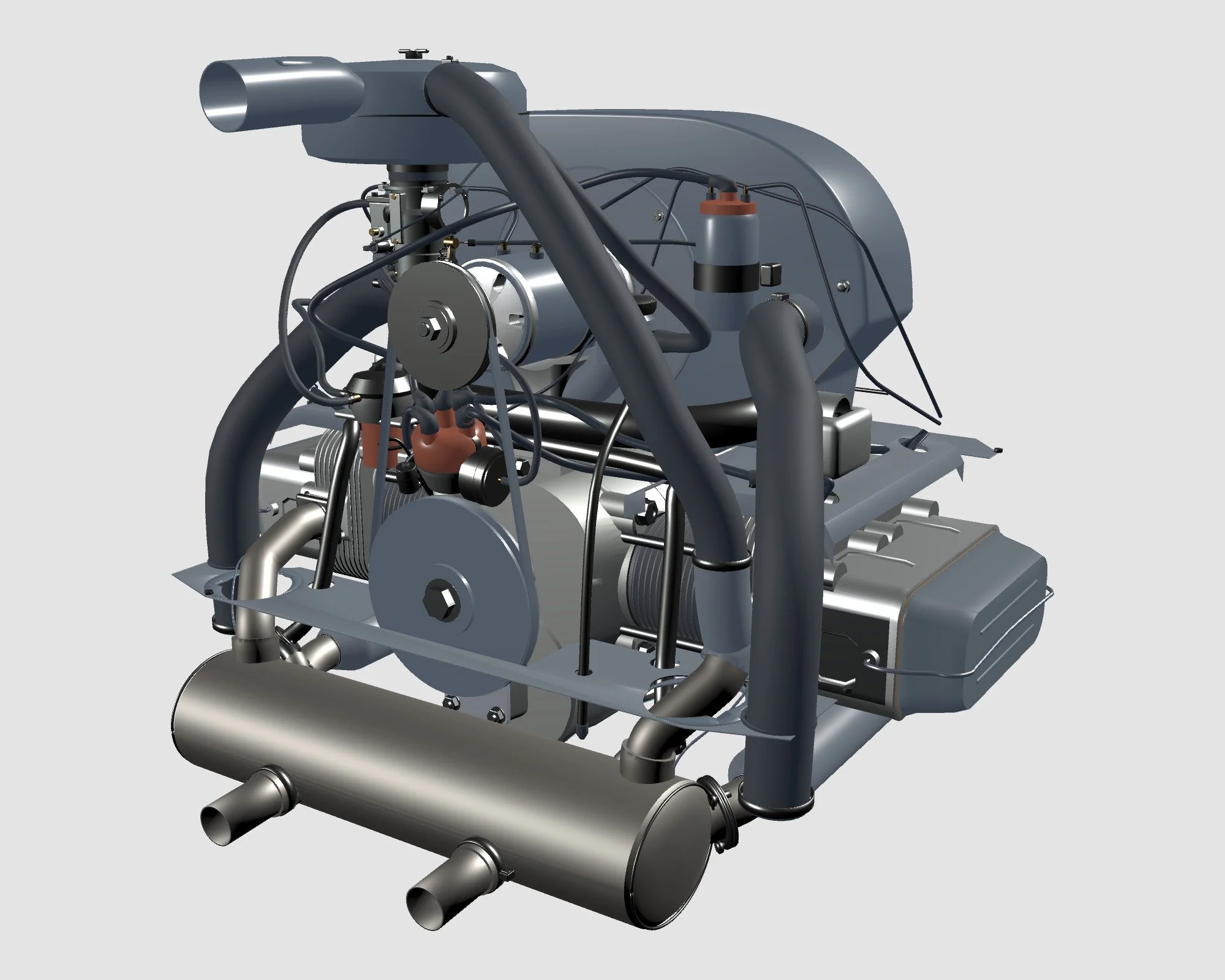 Image 19 of 27
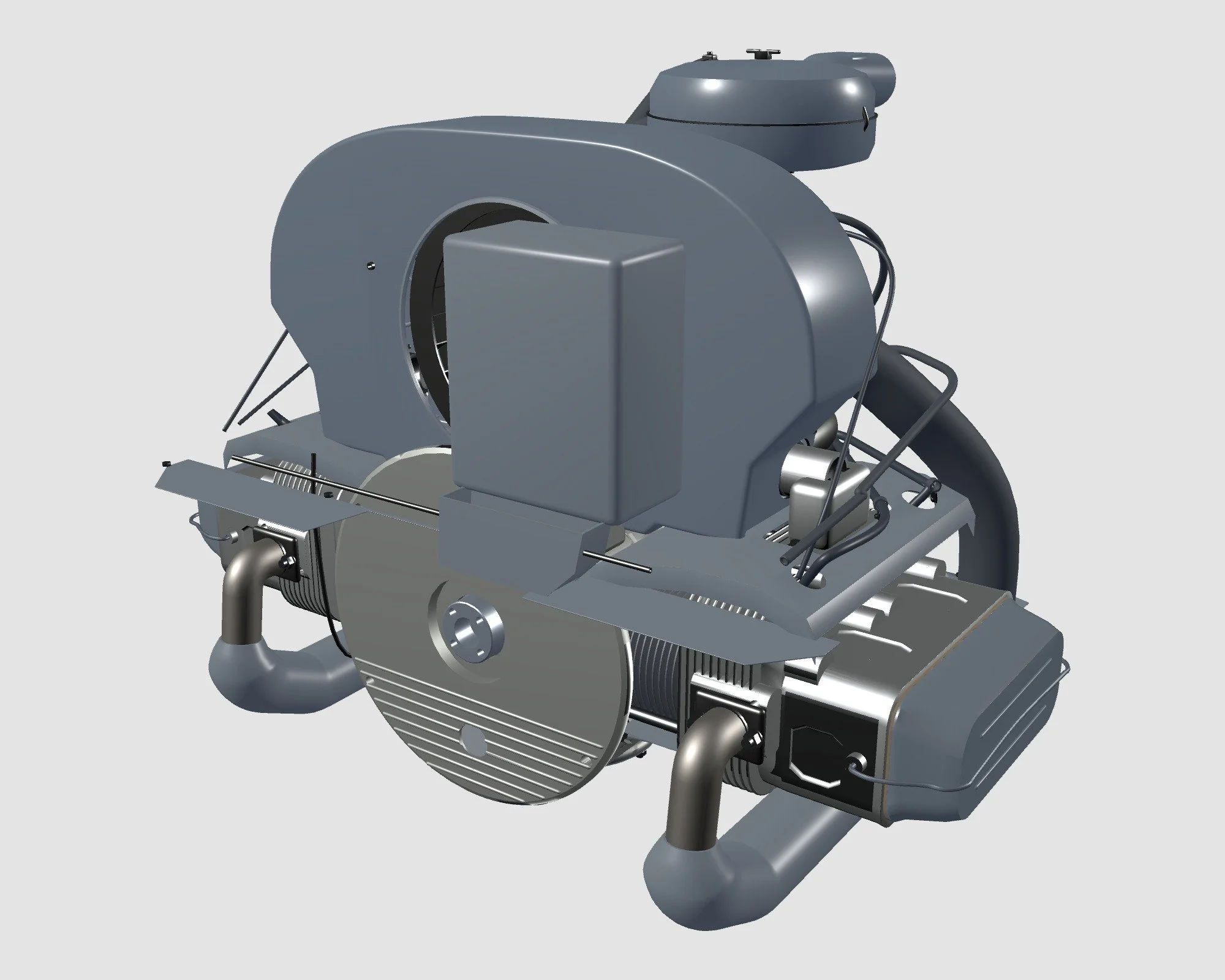 Image 20 of 27
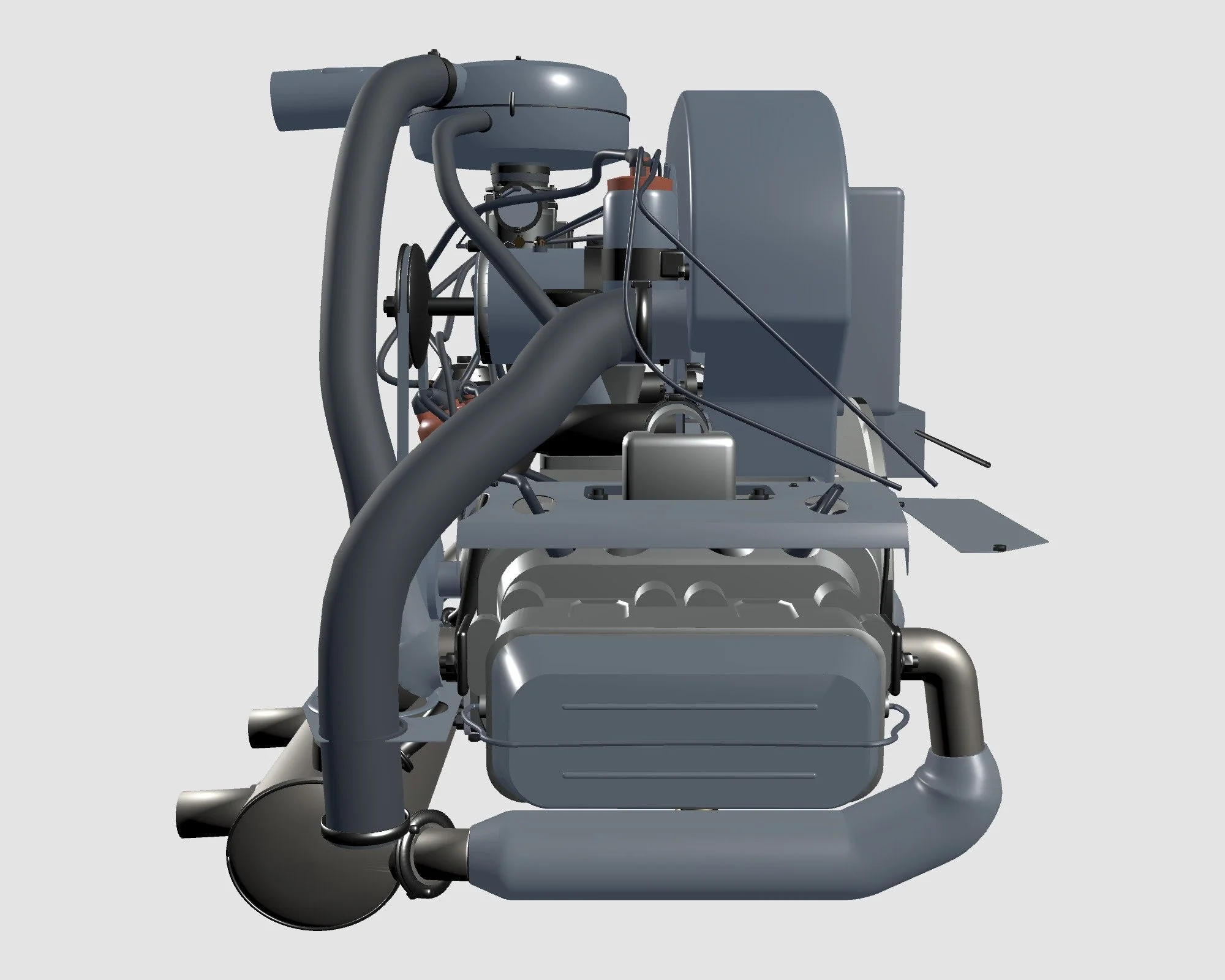 Image 21 of 27
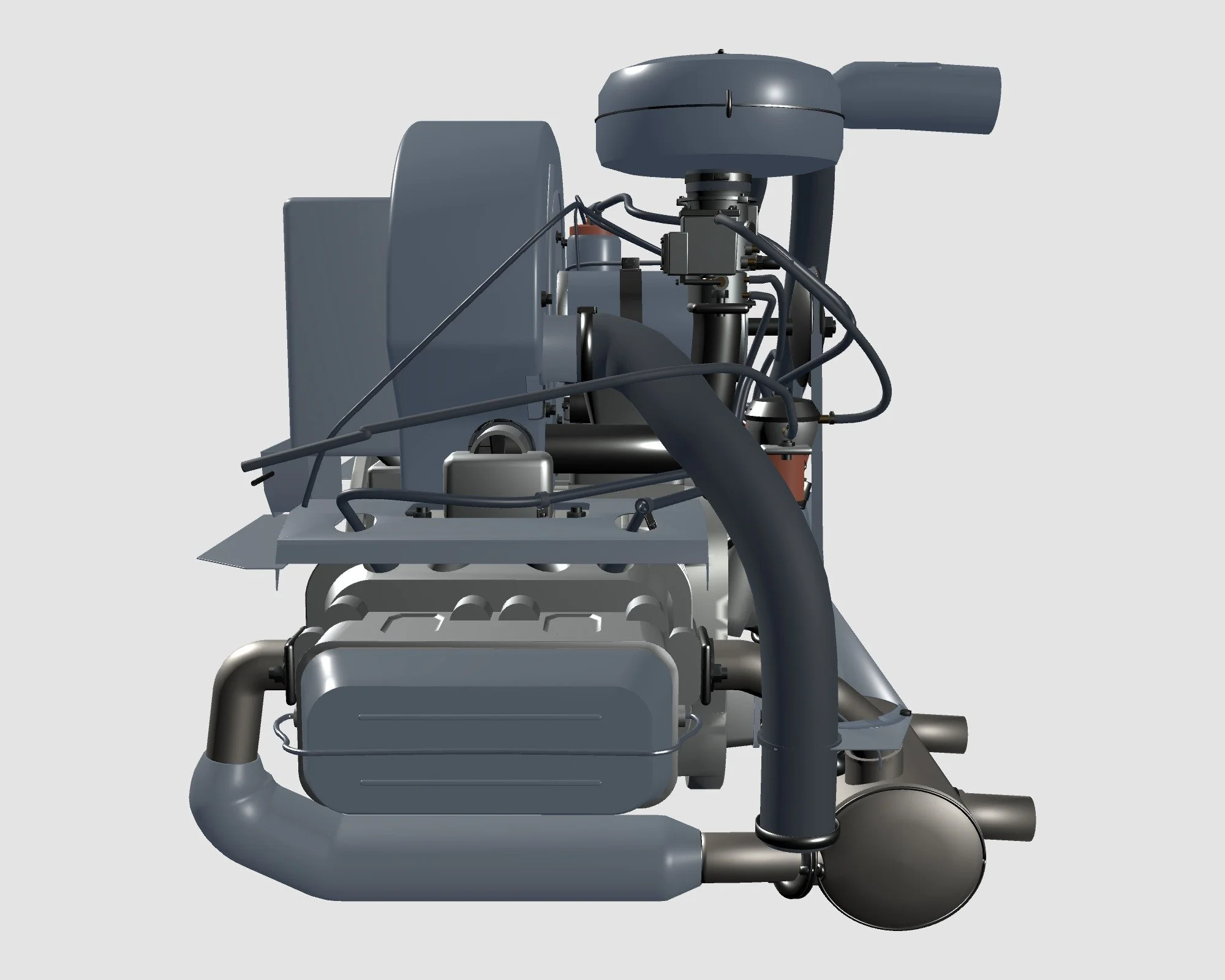 Image 22 of 27
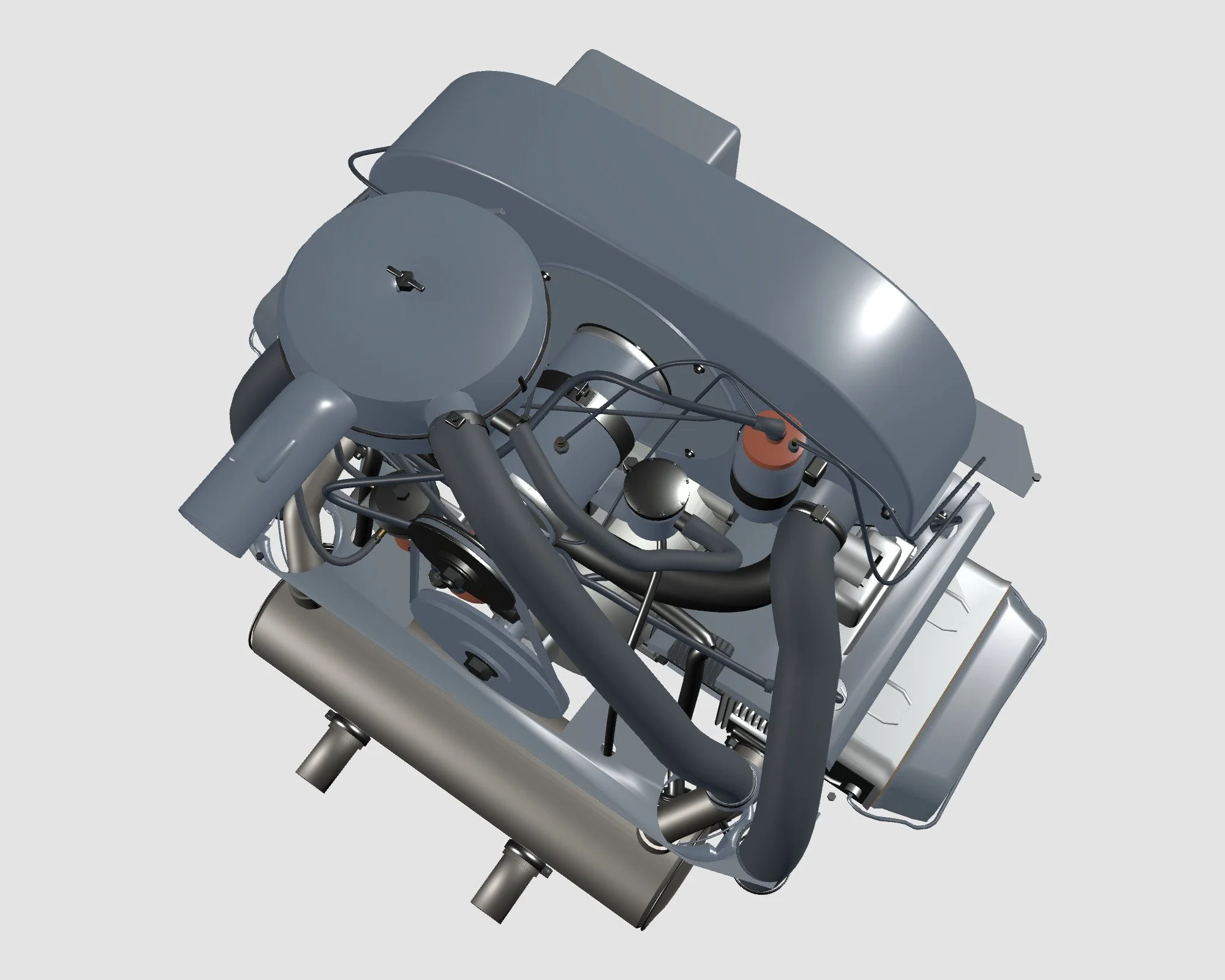 Image 23 of 27
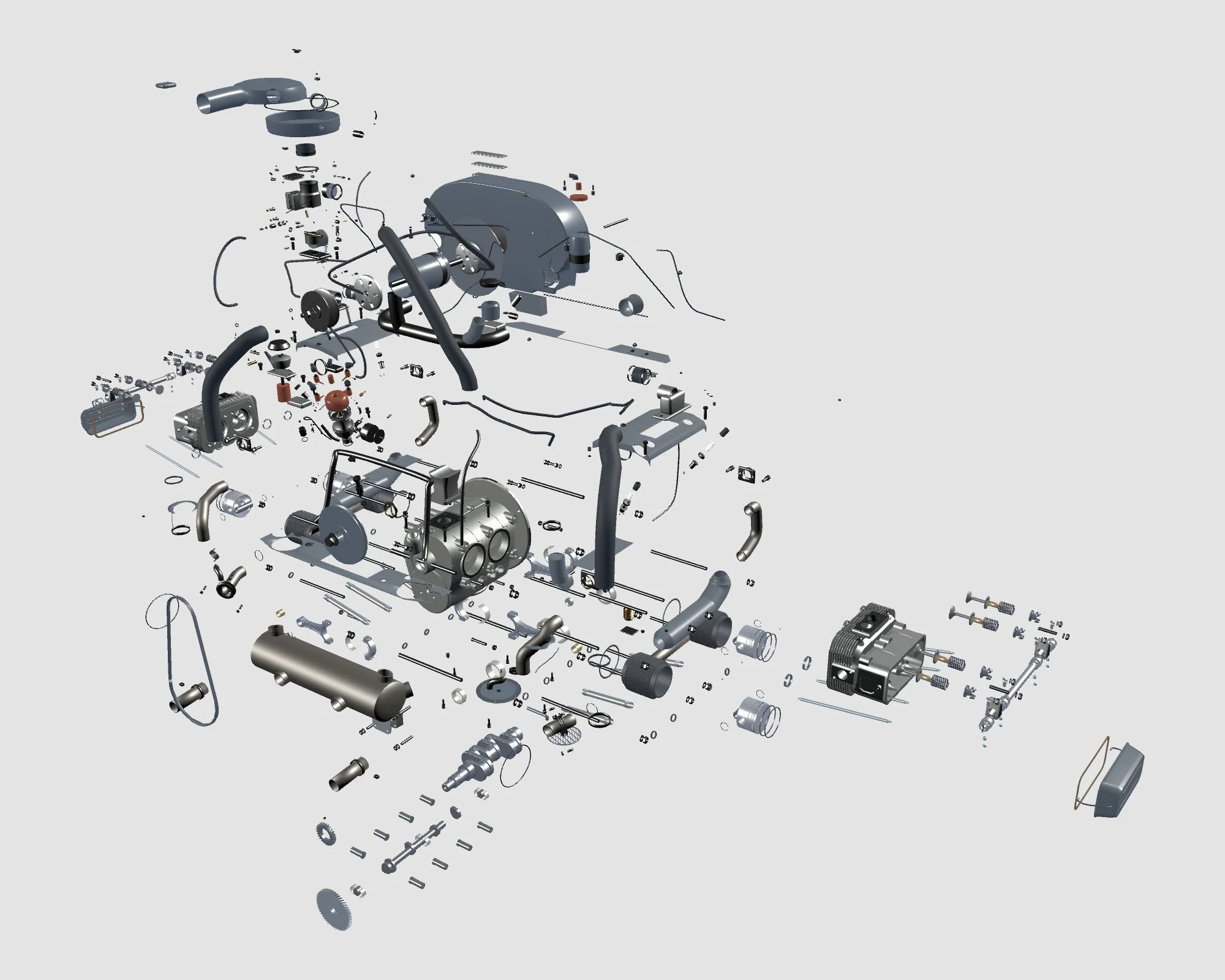 Image 24 of 27
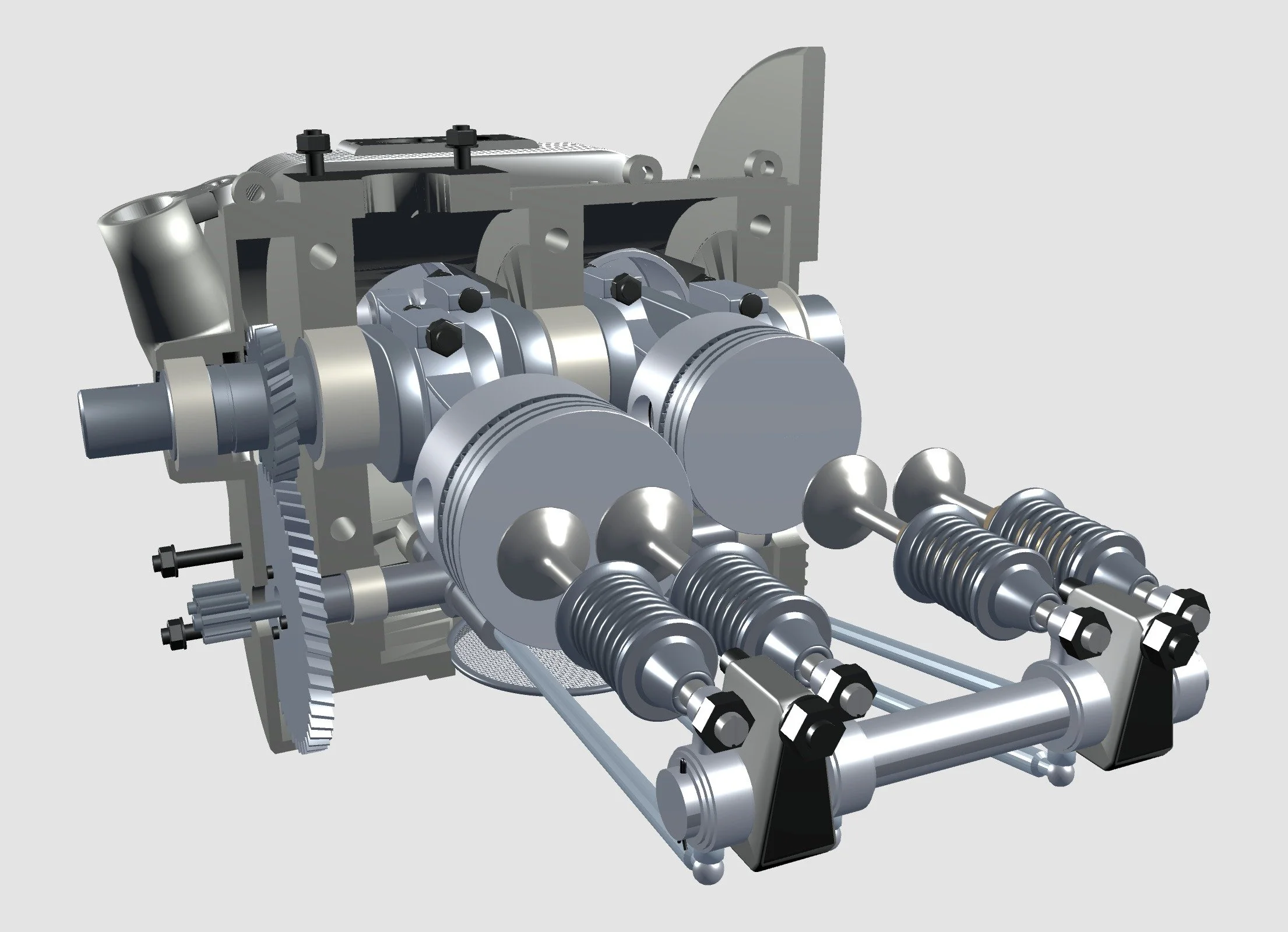 Image 25 of 27
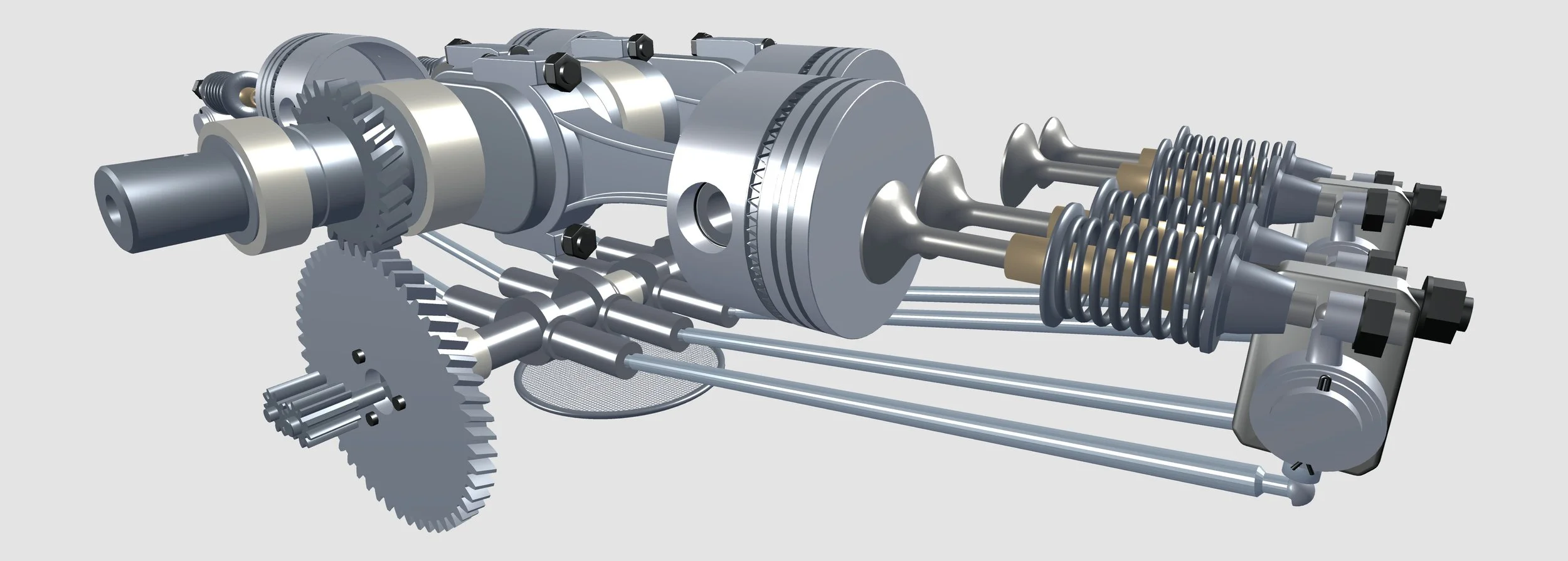 Image 26 of 27
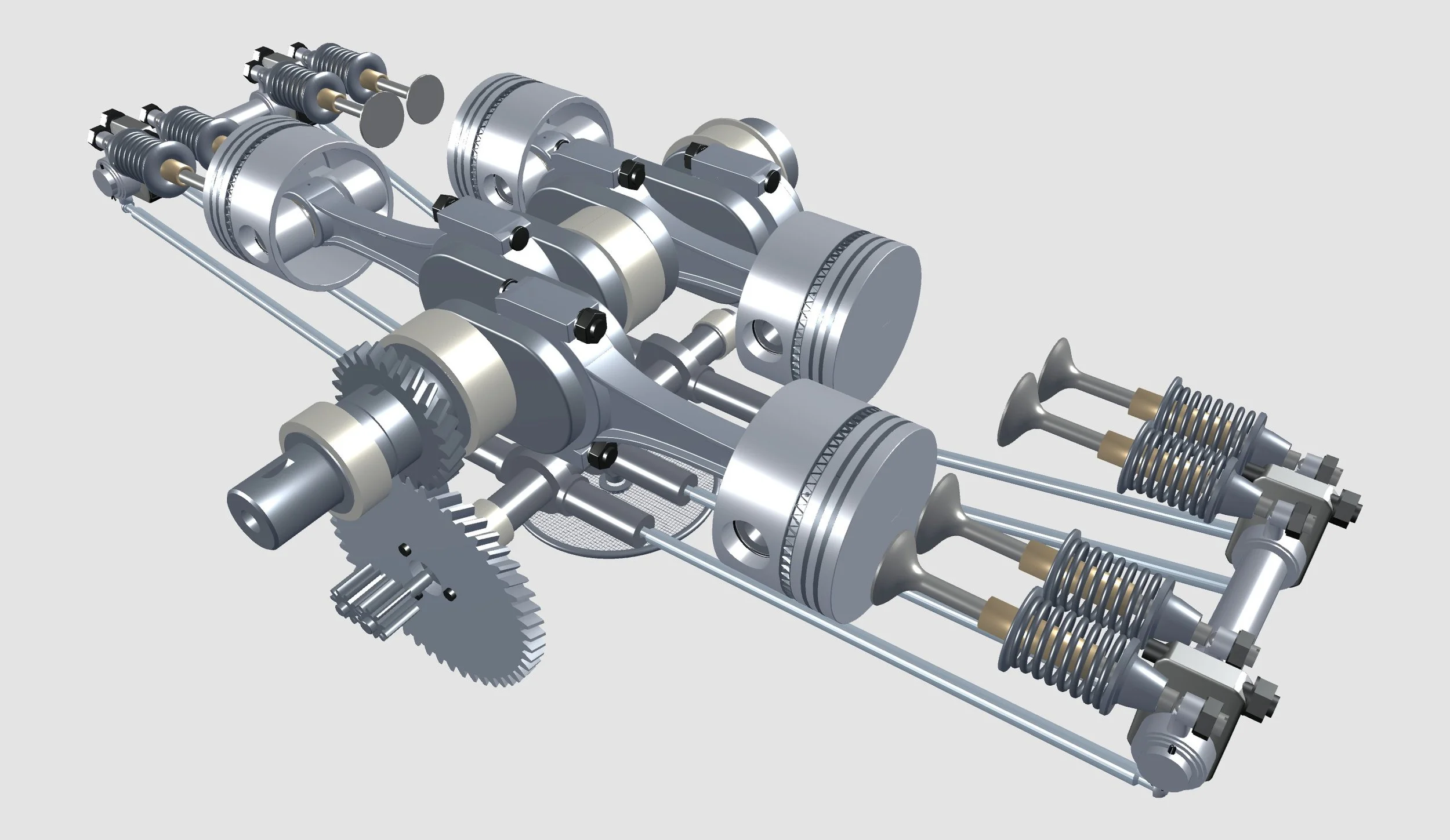 Image 27 of 27
An engine on your desktop / GE-004
Run it. Open it. Explore it.
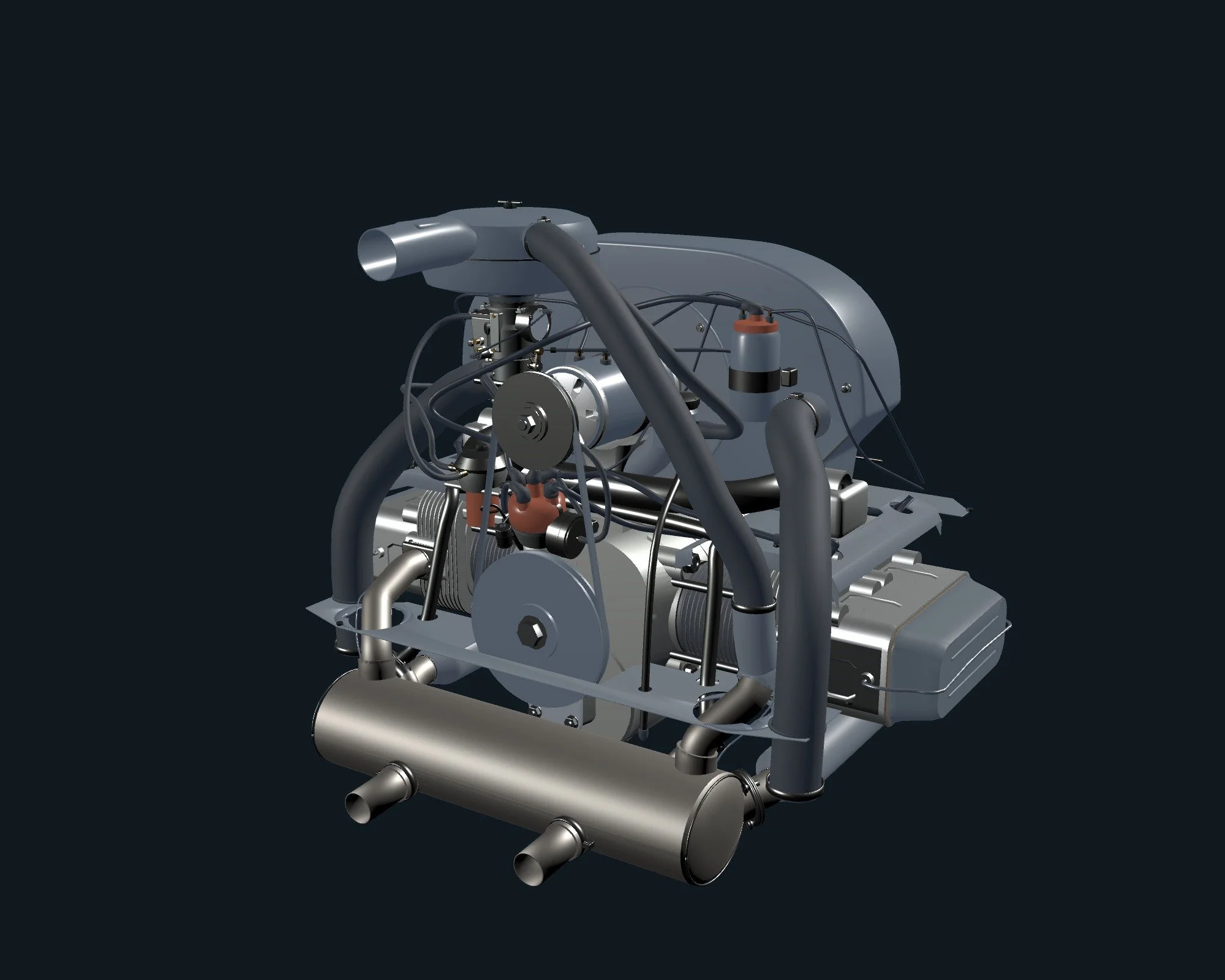
A transparent, borderless Windows application brings the Volkswagen Type 1 1600 AE to your desktop. Follow the opposed pistons, reveal the valve train and explore its air-cooled construction.
Interactive educational software — not a physical engine, manufacturing CAD file or video.
About the real engine
The engine behind a familiar shape
The Type 1 engine family helped define the Volkswagen Beetle: a compact engine mounted at the rear, with four horizontally opposed cylinders and fan-driven air cooling. The 1600 AE represents an early-1970s chapter in that long-running design. Its 1,584 cc displacement comes from an 85.5 mm bore and 69 mm stroke. Those dimensions describe the historical engine, not a certification of every modeled surface.
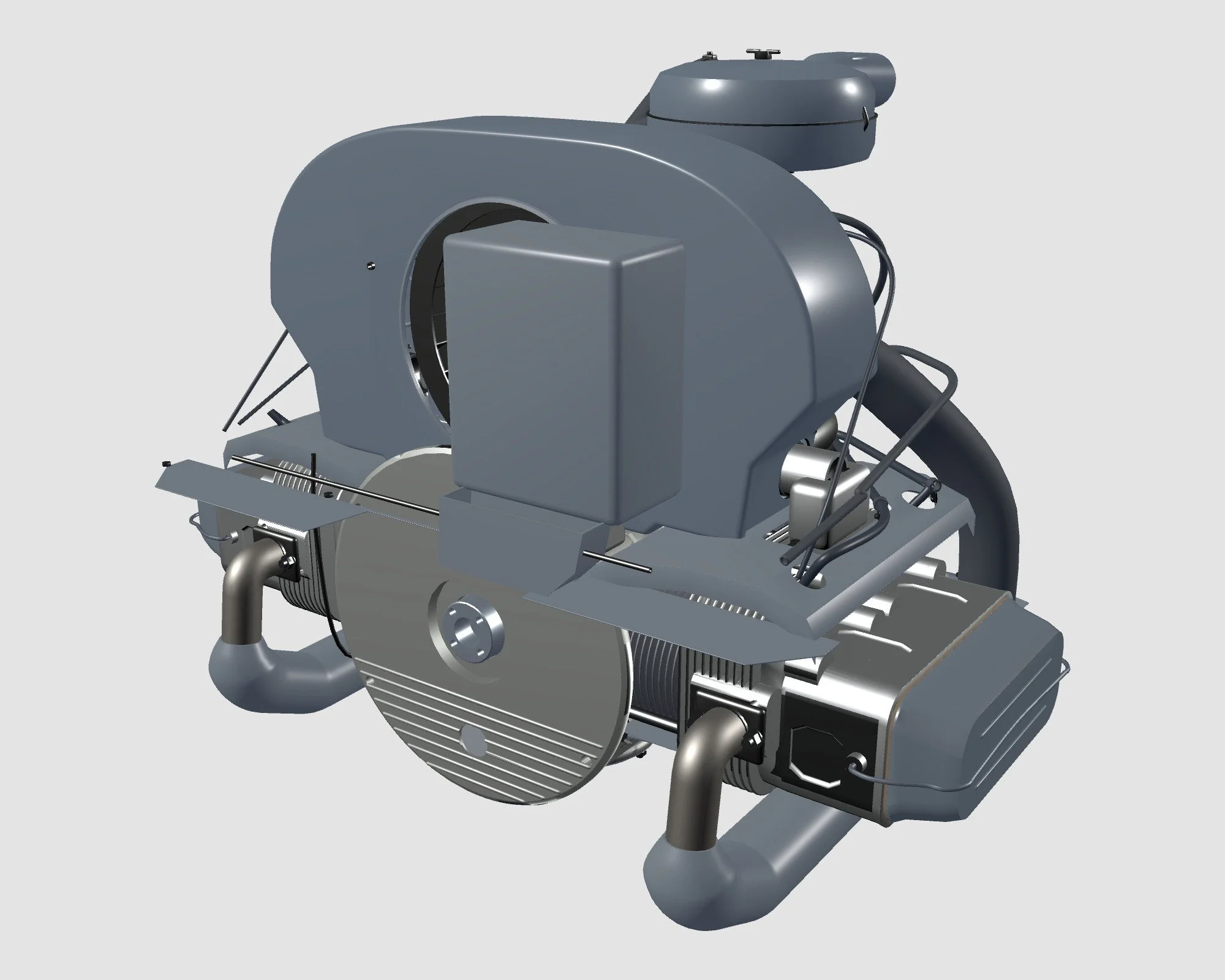
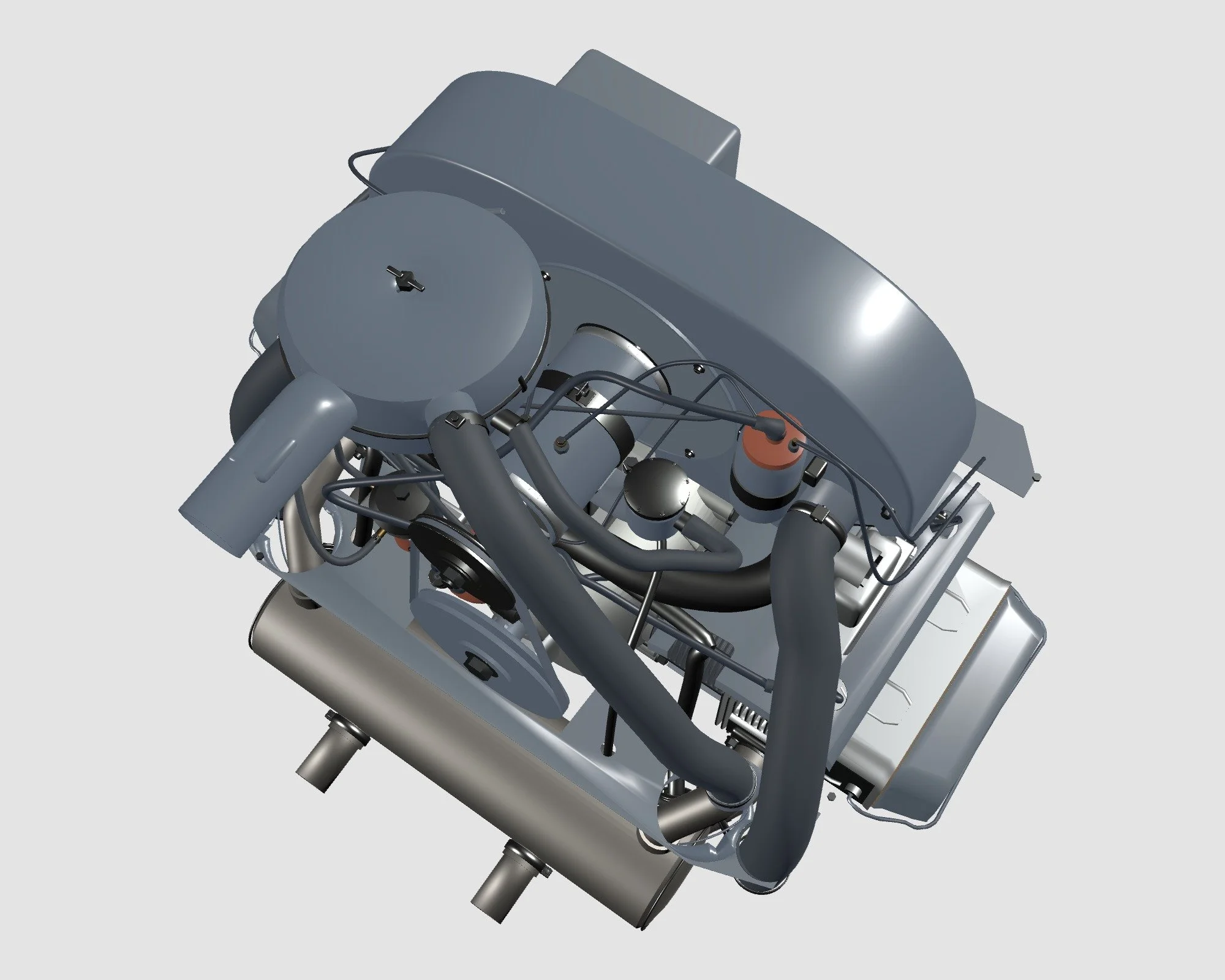
The arrangement is recognizable even outside the car. A broad fan housing rises above the crankcase, the generator and belt sit prominently at the front of the view, and the cylinder banks extend to either side. Intake pipes, pushrod tubes, ignition leads and exhaust pipes make the relationships between systems unusually easy to study.

Explore the engineering
Four cylinders, one crankshaft
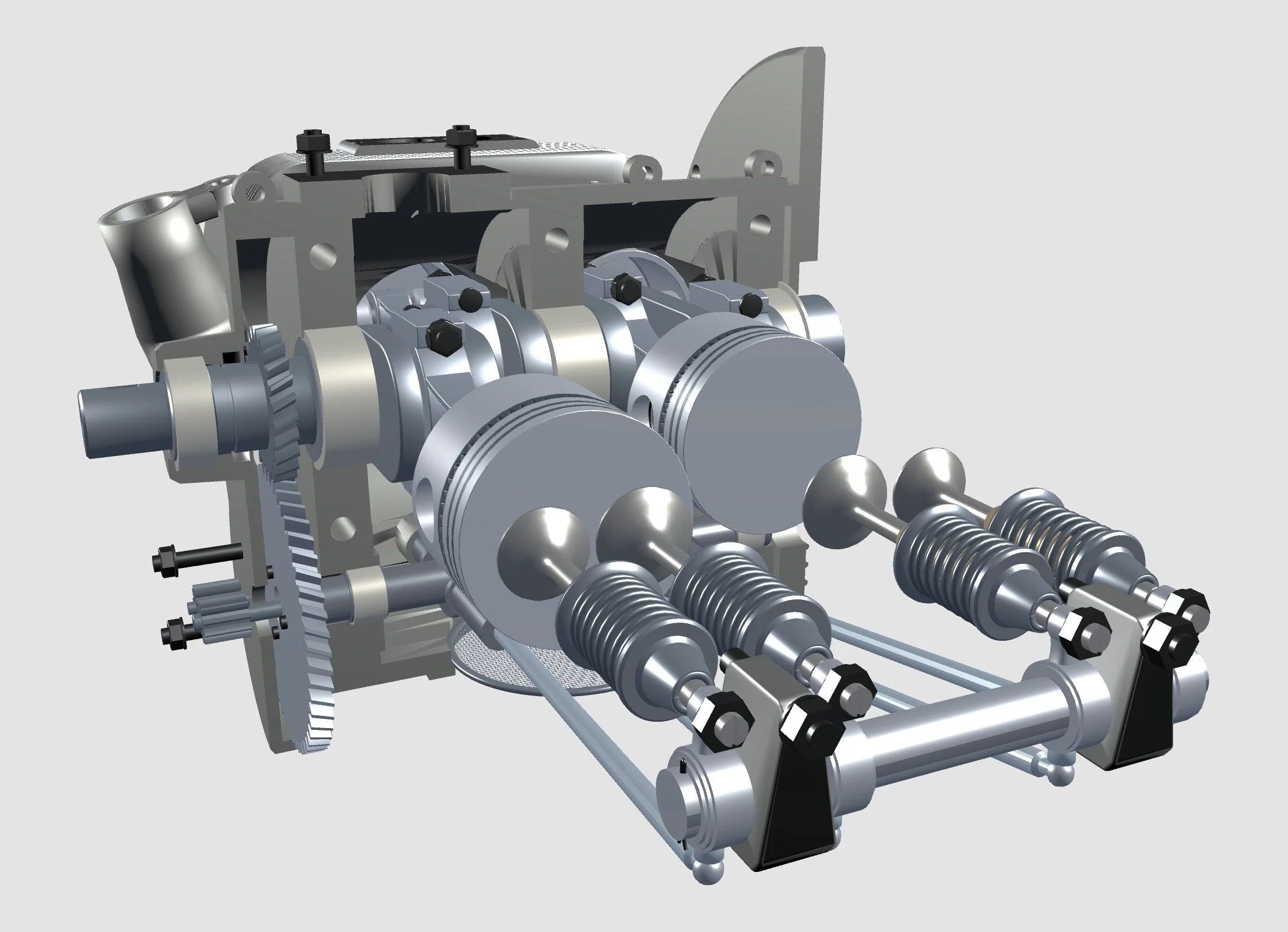
Two cylinders sit on each side of the central crankcase. Pistons move along their cylinder axes, while connecting rods transfer their force to offset crankshaft journals. As the crankshaft rotates, the rods change angle and the pistons travel between the ends of their strokes. Watching that relationship makes the conversion between straight-line and rotary motion easier to understand than a static drawing alone.
The horizontally opposed arrangement keeps the engine relatively low and spreads its width across two banks. It also gives this engine a very different visual rhythm from an inline four. The model lets you rotate around that layout and compare the cylinder banks, central rotating assembly and surrounding equipment.

Explore the engineering
Intake, ignition and exhaust
In the carbureted engine, incoming air passes through the air cleaner and carburetor before the mixture travels through the intake system to the heads. The carburetor meters fuel into that air stream. The distributor routes ignition voltage to the spark plugs in sequence, while the plugs initiate combustion inside the cylinders.
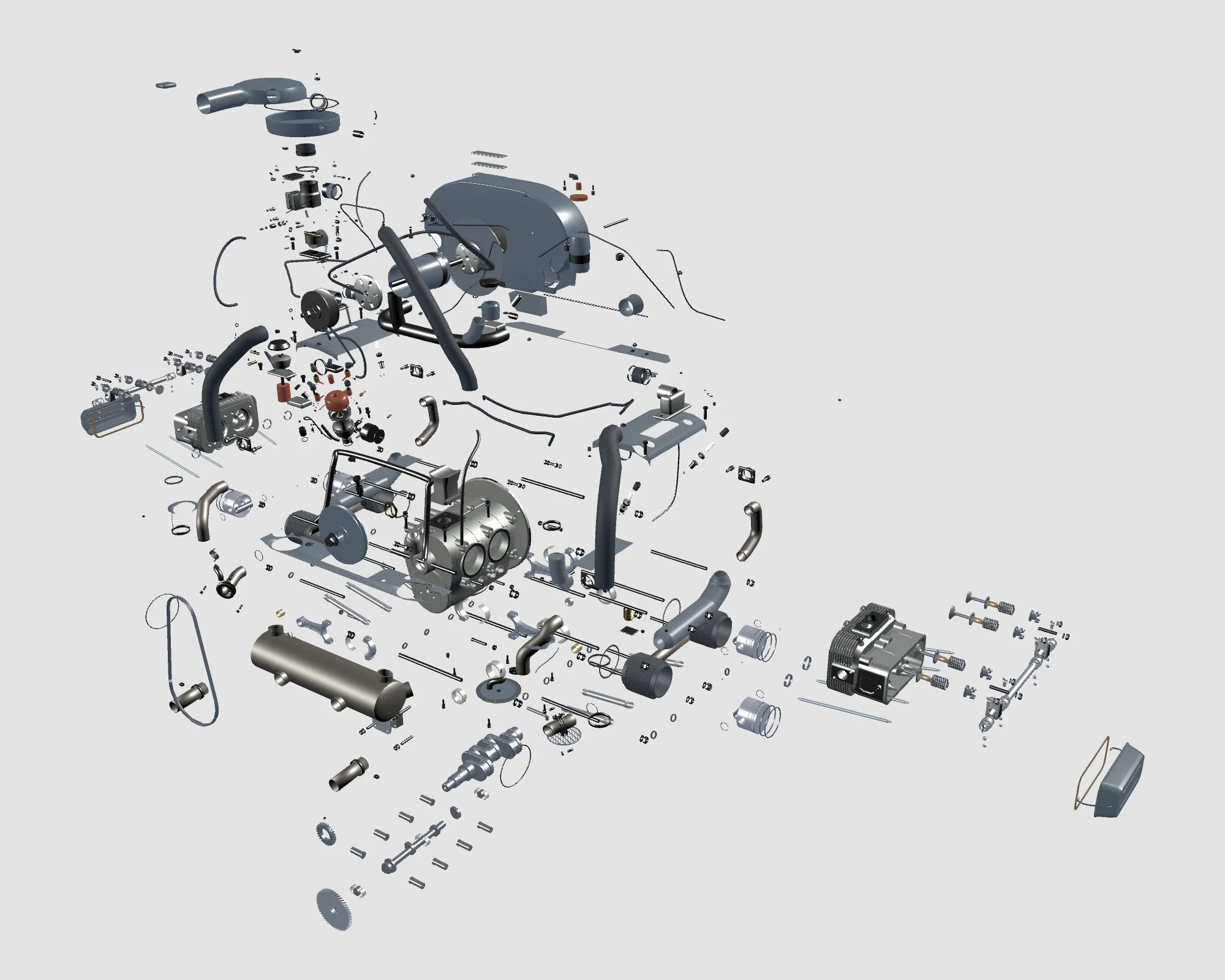
After the power stroke, exhaust leaves through the exhaust valves and flows into the pipes and muffler. Studying the assembled model alongside its separated view helps distinguish intake routing from exhaust routing and shows how these external systems surround the central engine. The application illustrates their construction; it does not simulate fuel flow, electrical ignition energy or exhaust acoustics.
Explore the engineering
Cooling with moving air
Air cooling uses moving air to carry heat away from the engine's surfaces instead of circulating liquid coolant through a radiator system. Cooling fins enlarge the exposed surface area of the cylinder barrels and heads. The fan and its housing direct air toward the surfaces that need it; the housing is part of an airflow system, not simply an exterior cover.
The belt drive connects crankshaft rotation with the generator and cooling fan assembly. This makes the pulleys and belt useful landmarks when exploring the engine. Look from above to see the fan housing and then move toward the cylinder banks to see where the finned parts sit beneath it. The model shows the arrangement but does not provide a thermal or airflow analysis.
Explore the engineering
Lubrication and construction
The historical engine uses pressure lubrication, with an oil pump supplying oil through internal passages and an oil cooler helping control oil temperature. Oil reduces friction, carries away heat and protects loaded surfaces. Many of those passages are hidden within castings, so an external or exploded view should not be mistaken for a complete lubrication diagram.
Light-alloy castings, separate finned cylinder barrels, cylinder heads, steel rotating parts and sheet-metal cooling components give the engine its distinctive mixture of shapes and finishes. Detachable valve covers provide access to the rocker gear. The separated construction helps explain both the engine's serviceability and the importance of assembling and sealing its many interfaces correctly. This product is for learning and visual exploration, not workshop procedures or dimensional repair decisions.
Interactive exploration
Run it. Inspect it. Take a closer look.
Watch the mechanism operate and adjust its presentation speed with the RPM control. Pause to examine a position, orbit around the engine, pan and zoom toward a detail, or return to the opening view with Reset. The transparent, borderless desktop presentation keeps attention on the model.
Inspect exposes internal mechanical components. Cutaway changes selected component visibility to reveal the interior; it is not a freely movable section plane. Exploded View separates component groups so you can study their relationships, then reassembles them. Appropriate linked assemblies remain grouped. Lock and Recover controls support desktop interaction.
The RPM display is a visualization control, not a dynamometer or a claim of mechanically accurate real-time engine speed at every displayed value. Animation playback is scaled for presentation and practical rendering. The product has no engine sound simulation.
Explore the engineering
The four-stroke cycle
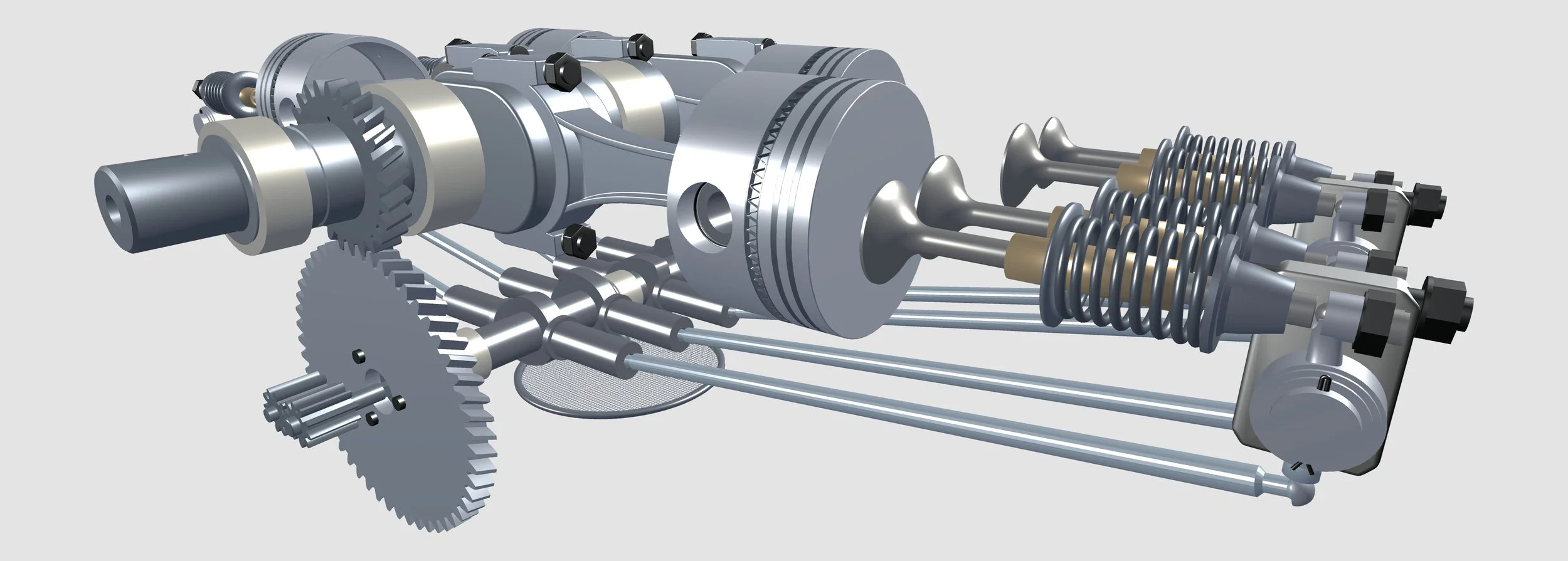
Intake: the piston travels downward with the intake valve open, drawing a fuel-air charge into the cylinder. Compression: both valves close as the piston rises and compresses the charge. Power: ignition starts combustion near the end of compression; expanding gases drive the piston downward. Exhaust: the exhaust valve opens and the returning piston pushes spent gases out.
Each cylinder completes these four strokes over two crankshaft revolutions. Valve events must therefore stay coordinated with piston position. The visualization helps you follow the mechanical relationships; it does not calculate combustion pressure, temperature, fuel consumption or engine output.

Explore the engineering
From camshaft to valves
The camshaft operates at half crankshaft speed in a four-stroke engine. Its lobes act through followers and pushrods, carrying motion outward to rocker arms in the cylinder heads. Each rocker changes the direction of that motion to open a valve against its spring. As the cam moves past its lifting portion, the spring closes the valve.
This overhead-valve arrangement places the camshaft in the crankcase while the valves remain in the heads. The long pushrod path and exposed relationships between crankcase, tubes, heads and rocker gear are central to the Type 1's character. Inspect views make those relationships easier to follow without the surrounding exterior components obscuring the mechanism.
Technical information / Windows download
Everything you need to get started.
Windows digital download — $40.00 USD.
Controls and Windows compatibility
Use middle-mouse drag to orbit, right-mouse drag to pan, and the wheel to zoom. Arrow keys also orbit, plus and minus adjust zoom, and Shift provides finer movement. Space pauses or resumes; I changes the inspection view, C toggles Cutaway, E toggles Exploded View, R resets, L locks and Home recovers the window. The on-screen controls provide the main model functions.
This is a 64-bit Windows desktop application requiring a graphics driver with OpenGL 3.3 support. Performance depends on the computer and graphics hardware. It is not a browser application, macOS application, mobile app or 3D-printable file. Extract the downloaded archive before launching, and keep the application, companion data file and desktop helper together.
Educational scope
Wolfgang Engineering models are representational educational visualizations. Some geometry, materials, clearances and mechanical details use documented approximations. They are not factory-certified engineering CAD, manufacturing specifications, service instructions or substitutes for authoritative technical documentation. Historical names identify the subject; Wolfgang Engineering is independent of Volkswagen.