
 Image 1 of 7
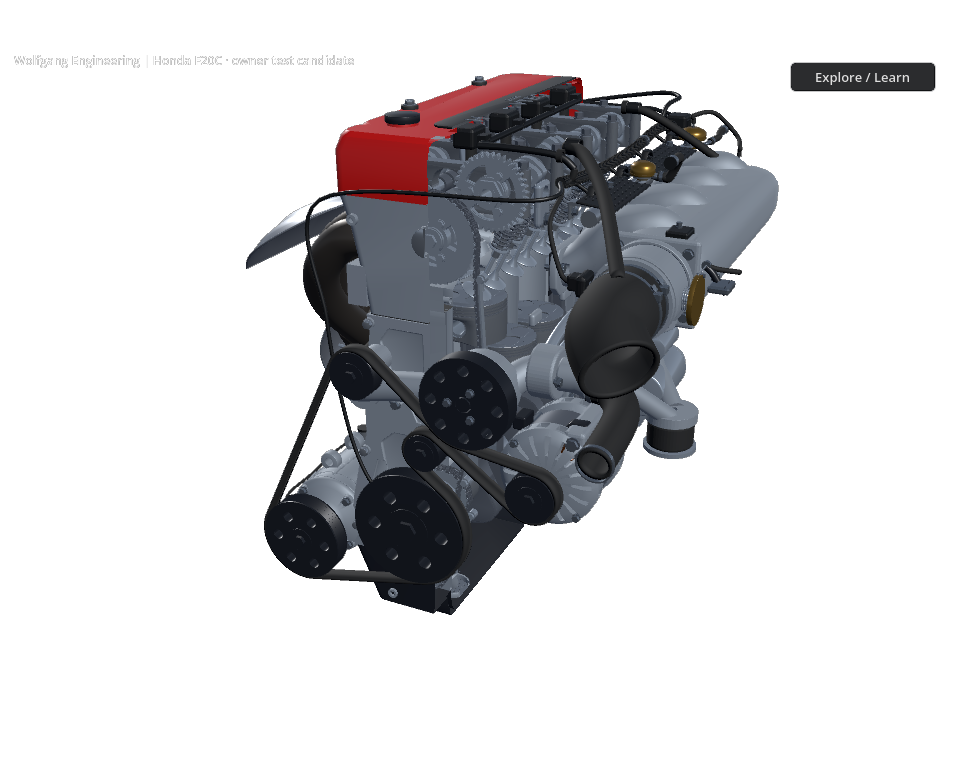 Image 2 of 7
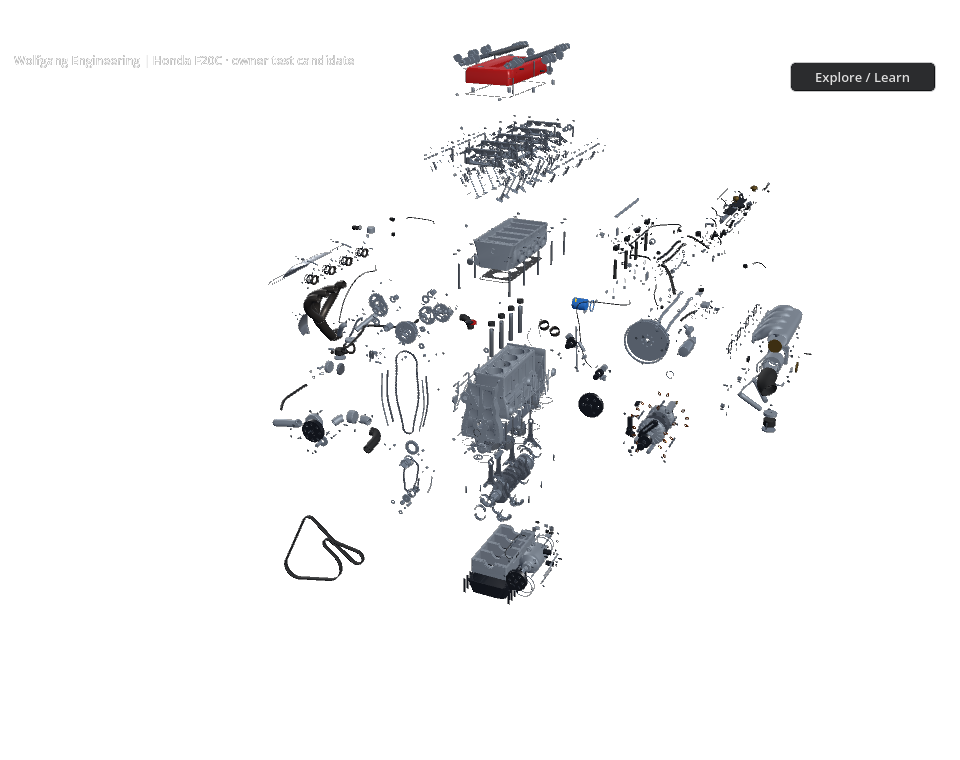 Image 3 of 7
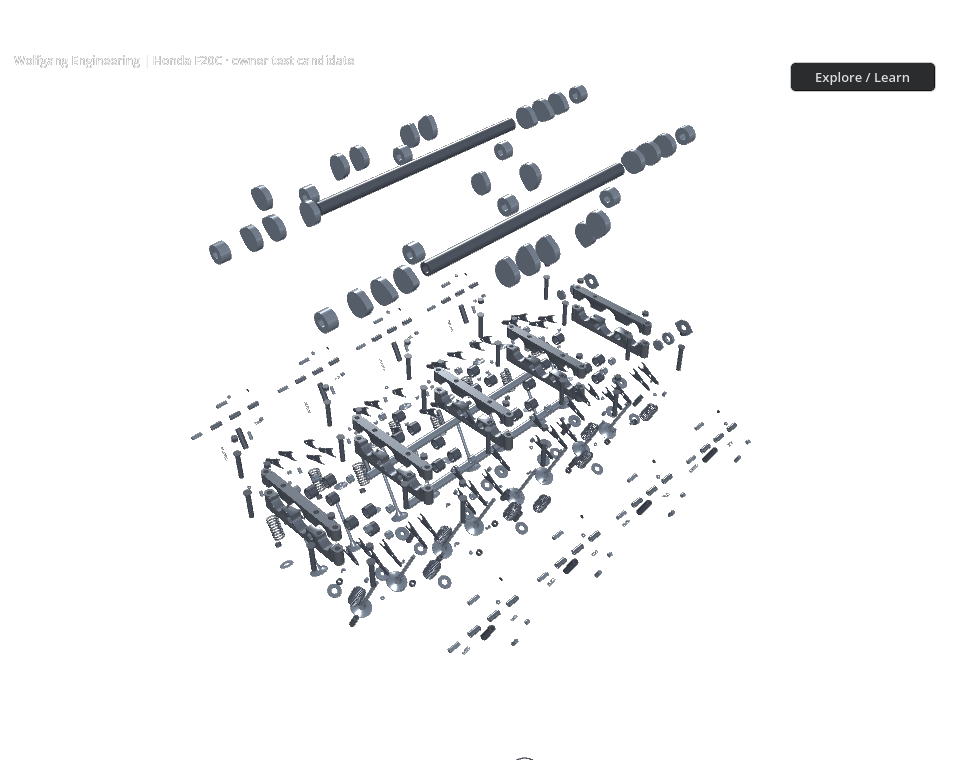 Image 4 of 7
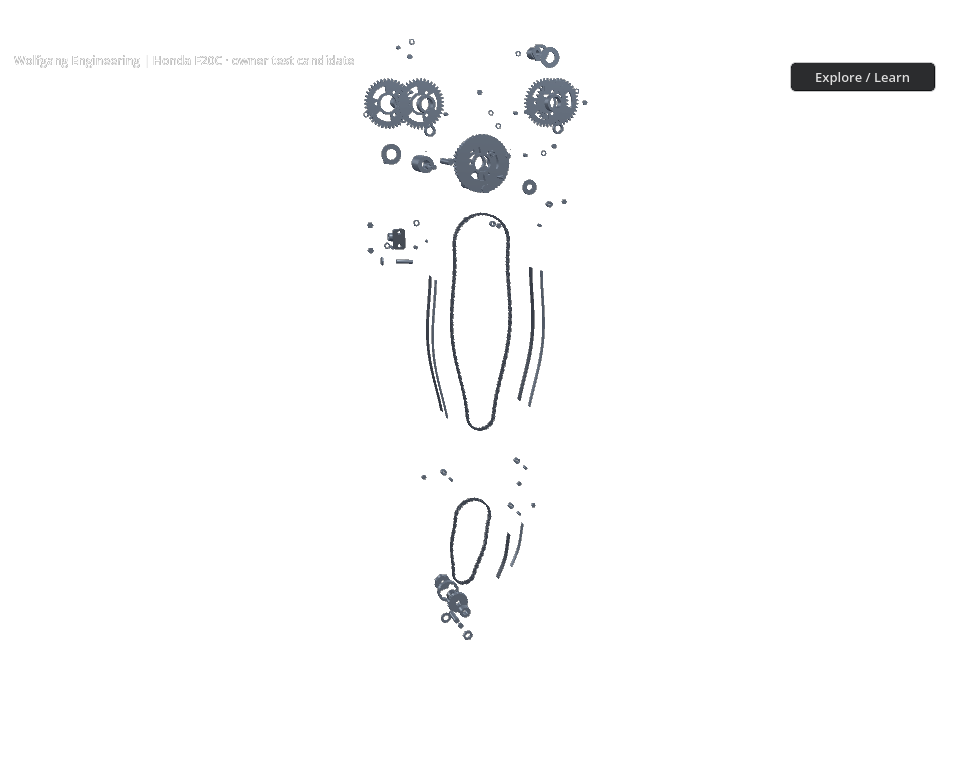 Image 5 of 7
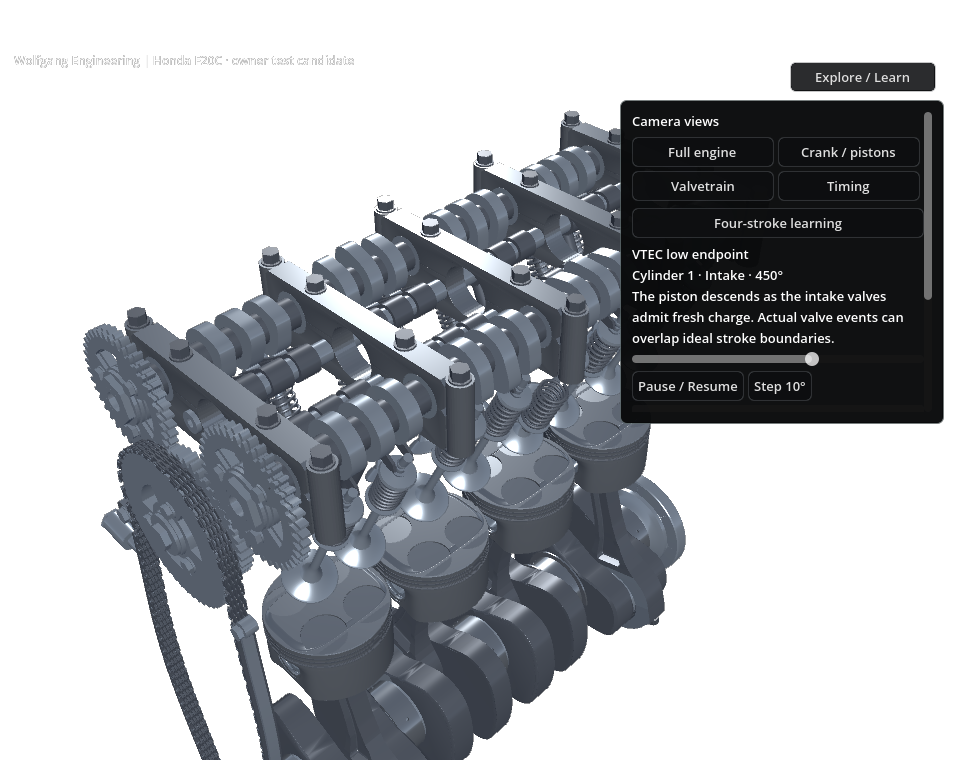 Image 6 of 7
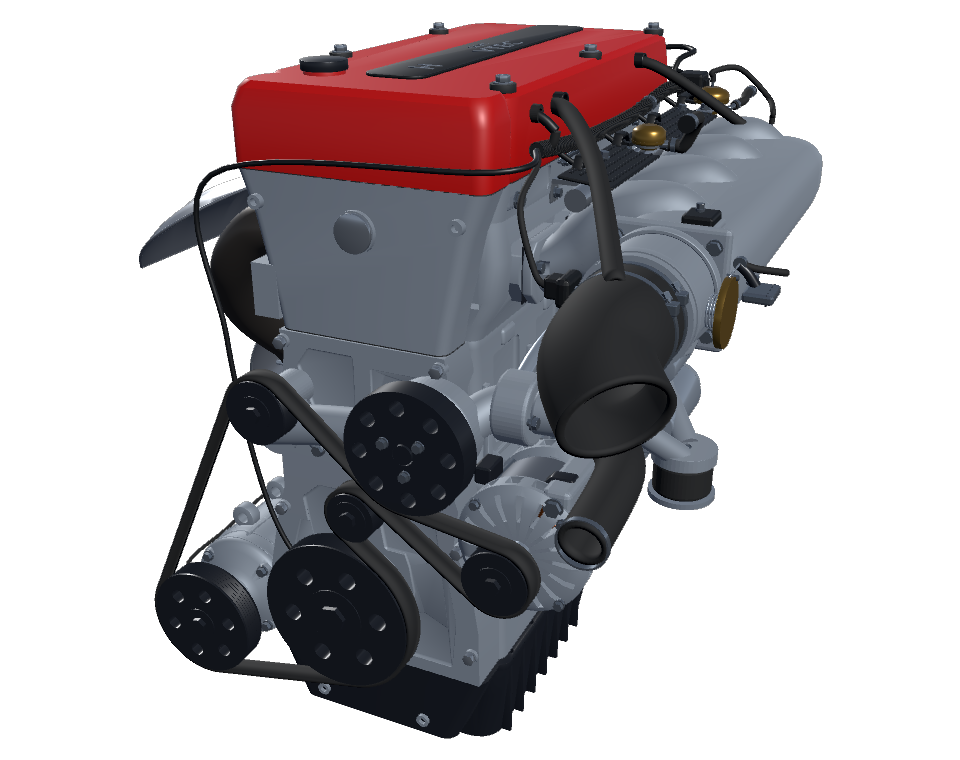 Image 7 of 7
An engine on your desktop / GE-018
Run it. Open it. Explore it.
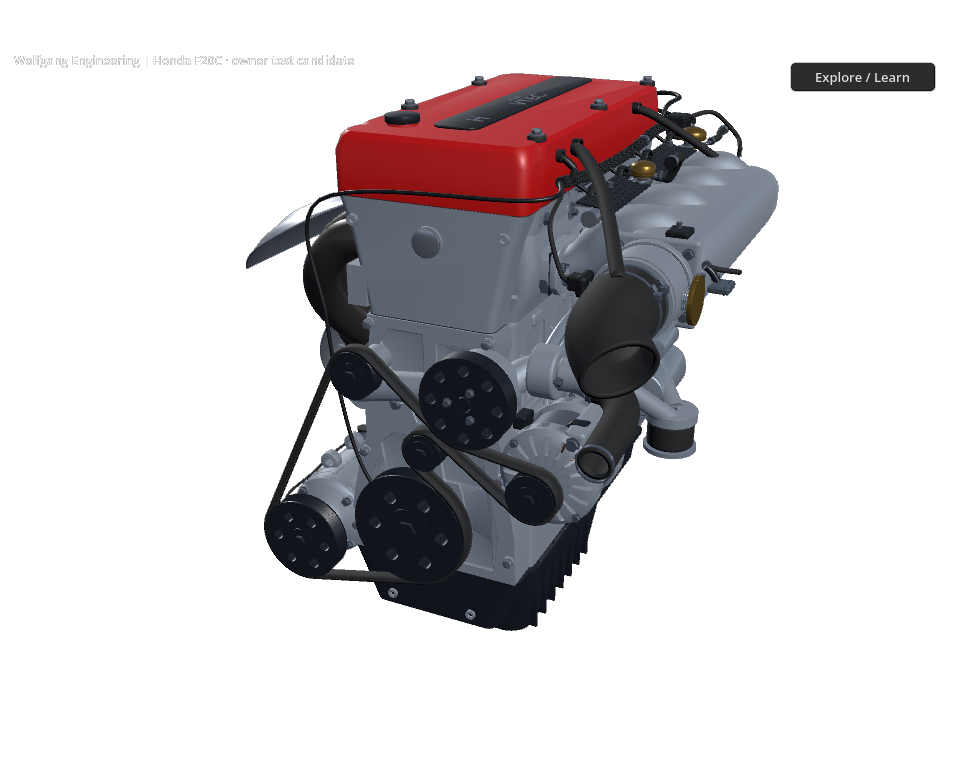
A transparent, borderless Windows application brings the Honda S2000 F20C1 to your desktop. Follow the pistons, reveal the DOHC valvetrain and explore the engine from several angles.
Interactive educational software — not a physical engine, manufacturing CAD file or video.
Orbit / Pan / Zoom

About the real engine
A compact engine with an overhead-cam layout
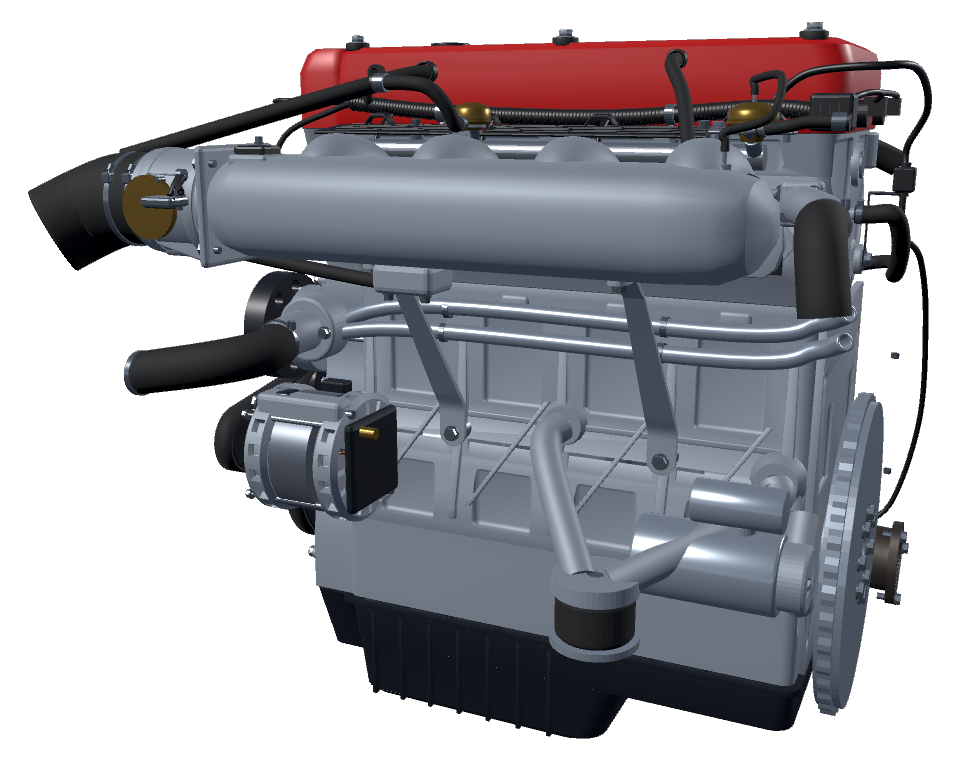
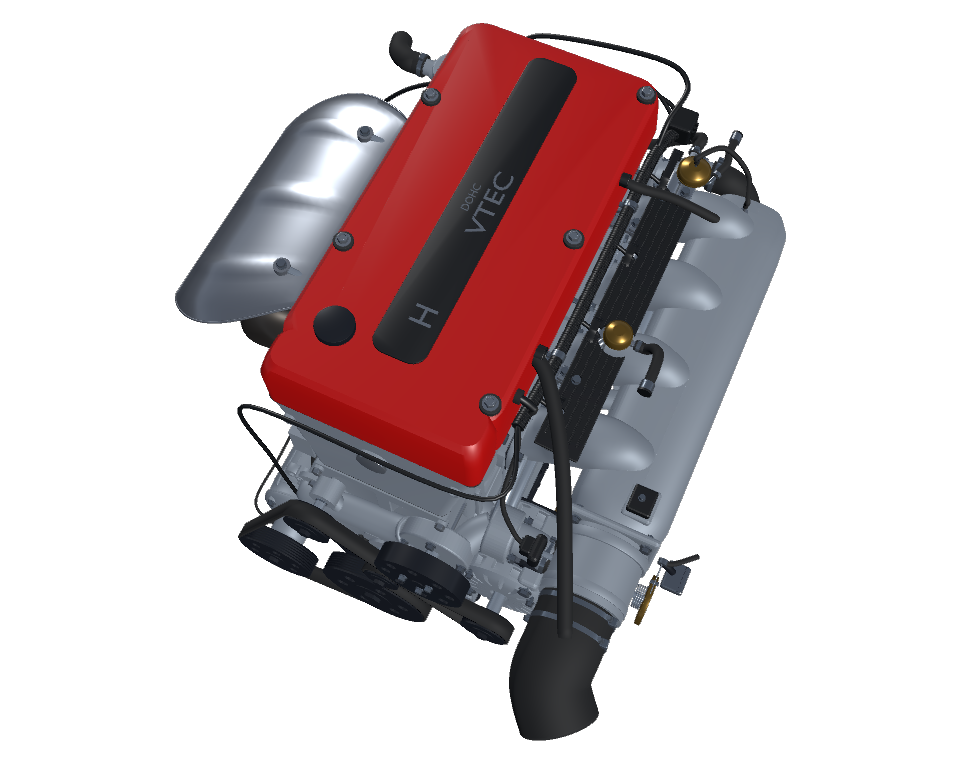
The F20C1 puts four cylinders in one line beneath a cylinder head with two overhead camshafts. The S2000 installation surrounds that central mechanism with intake, ignition, cooling and exhaust equipment. The red cover, side-mounted intake and external drive make useful landmarks when exploring the assembly.
This product carries the owner-selected 2001 Honda S2000 F20C1 2.0L title. The accepted reconstruction uses a 2000 US AP1 F20C1 reference basis; it is an educational representation, not a claim of exact year-specific interchangeability.
Explore the engineering
Four pistons, one crankshaft
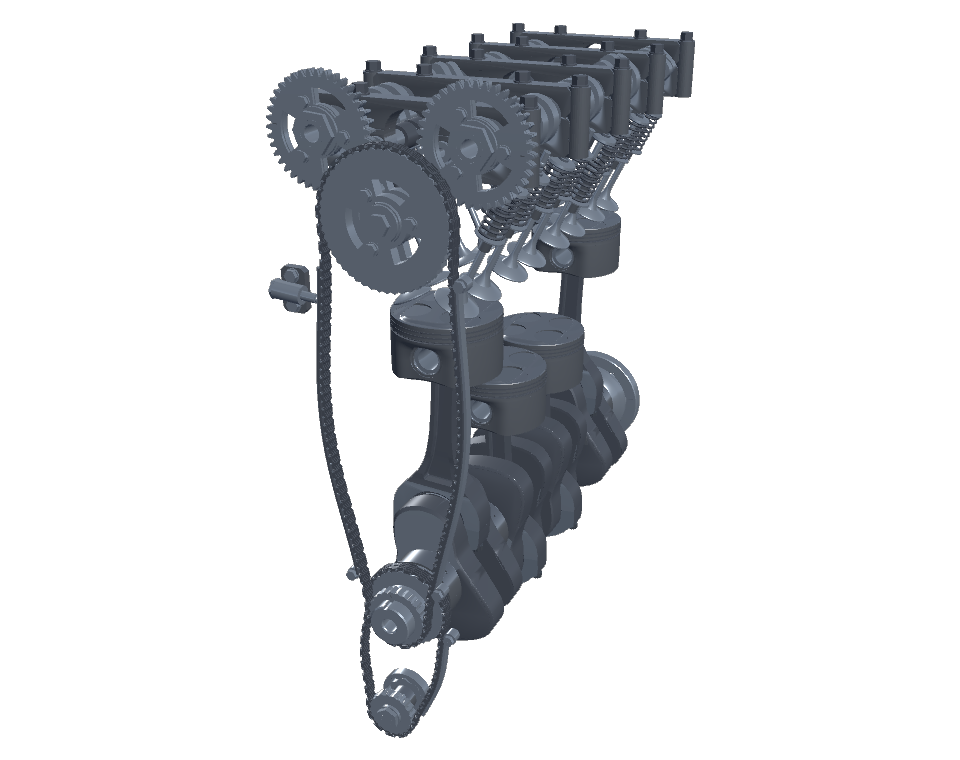
The connecting rods link the four pistons to the crankshaft. As the crankshaft rotates, the rods change angle and each piston moves along its cylinder. Inspect views make this relationship visible without the outer castings obscuring it.
Watch the straight-line piston motion alongside the turning crankshaft, then pause at a chosen position. The animation illustrates linked motion; it does not calculate cylinder pressure, bearing loads, torque or engine output.
Explore the engineering
Intake, ignition and exhaust
The intake system provides a path toward the cylinder head, while the exhaust system carries gases away from the exhaust ports. Ignition components and wiring sit around the head, and hoses and accessories fill the space around the main engine structure.
Rotate between the assembled and separated views to distinguish these systems and their connections. Their geometry is visible, but the application does not simulate fuel flow, spark energy or exhaust acoustics.
Explore the engineering
Cooling and lubrication
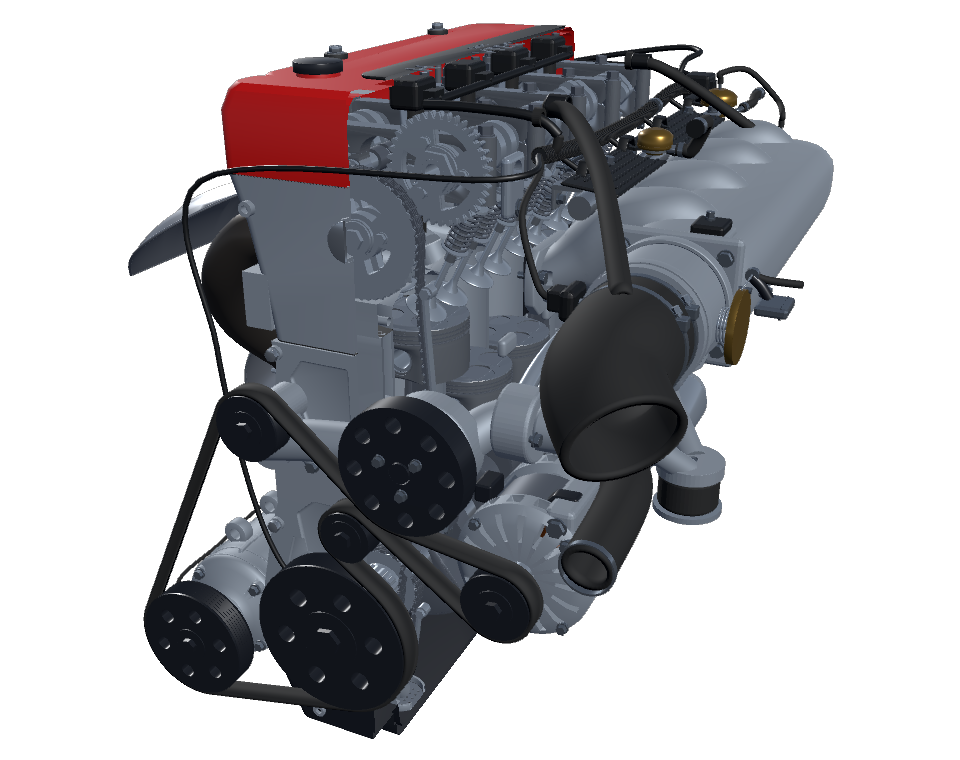
Cooling connections and hoses surround the engine, while the oil pan closes the lower assembly. Internal oil and coolant paths are largely hidden inside the real castings. The model helps locate visible housings and connections around the moving parts.
An exploded or cutaway view is not a complete fluid-circuit diagram. Factory jacket and gallery details, flow, pressure and thermal performance are not certified or simulated.
Explore the engineering
Separate the parts. Keep their size.
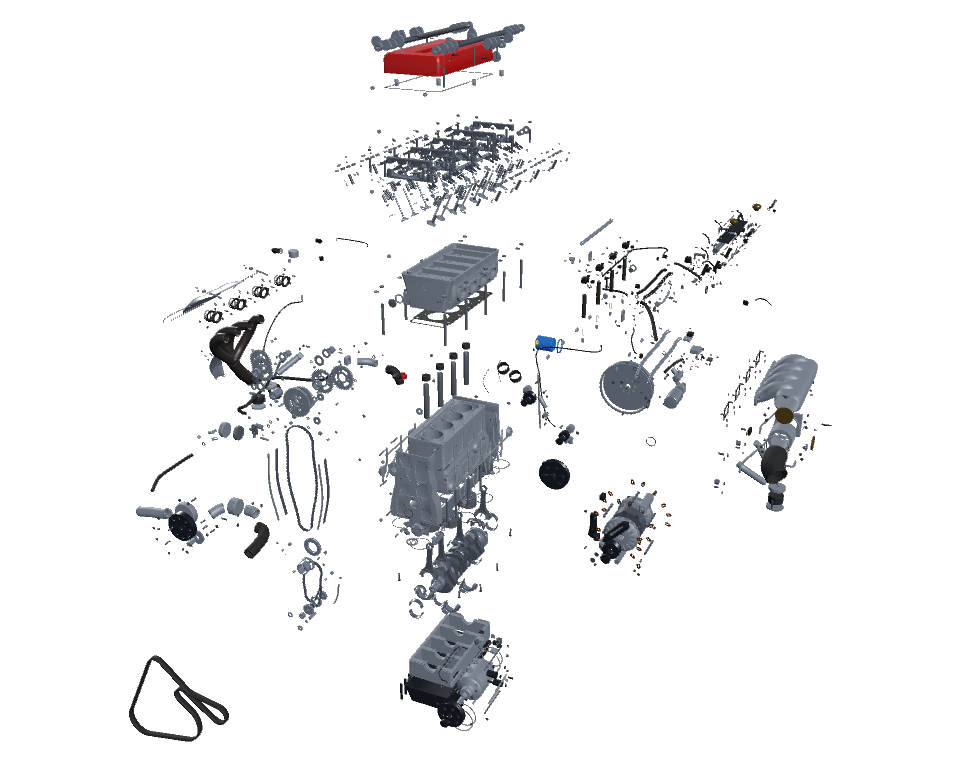
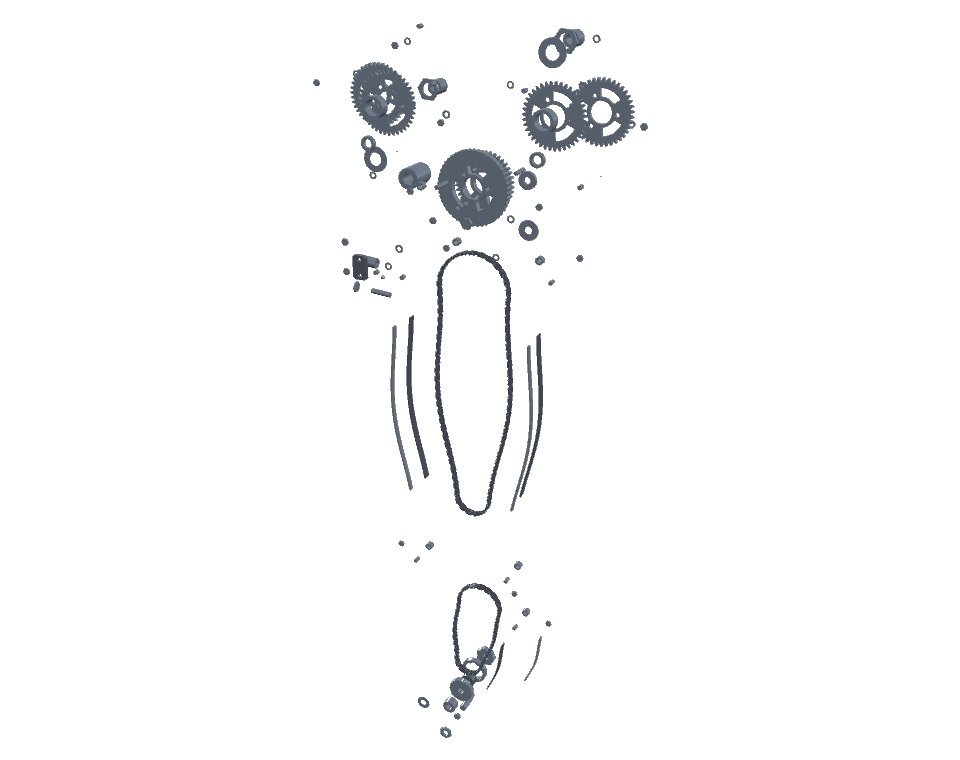
Exploded View separates individual source-render components, including the VTEC/valvetrain pieces and timing hardware. Castings, steel parts, dark pulleys and brackets, hoses and fasteners retain their distinct finishes. Each part keeps its assembled size.
Explode uses positional offsets only and does not pull the camera back. Some parts can leave the current view; use explicit camera targets, pan, orbit or zoom. Continuous belt and chain meshes remain intact. This is an educational breakdown, not a workshop disassembly sequence.
Interactive exploration
Run it. Inspect it. Take a closer look.
Adjust presentation speed, pause the mechanism and use Inspect or Cutaway to reveal the internal assembly. Orbit, pan and zoom toward a detail, or choose one of four camera targets. Component selection provides names, explanations and reversible highlighting.
Explode pauses motion, and reassembly restores the previous motion state. The 60–2200 RPM slider is a presentation control, not a factory operating range, dynamometer or performance claim.
Explore the engineering
The four-stroke cycle
Intake draws charge into the cylinder as the piston descends. Compression brings the piston upward with the valves closed. Combustion in the real engine produces the power stroke. Exhaust then allows the rising piston to push spent gases out.
The application’s learning controls follow supplied mechanical motion over two crankshaft revolutions. Pause, advance by 10 degrees or use slow playback to compare piston position with valve events. Combustion pressure, temperature, fuel consumption and output are not calculated.
Explore the engineering
From camshafts to valves — and VTEC
The overhead camshafts coordinate valve opening with crankshaft motion. The timing presentation makes the relationship visible, while the valvetrain exposes rockers, valves and springs. Separate views help distinguish the parts that control valve movement.
VTEC LOW and HIGH are paused demonstrations of stable supplied endpoints. Selecting a mode stops the engine and jumps to its inspection phase; Run or learning can examine the selected stable endpoint. These are not automatic RPM-triggered engagement, ECU logic, oil-pressure response or a running hydraulic pin-lock transition.
Technical information / Windows download
Everything you need to get started.
Windows digital download — $40.00 USD. GE-018 V1.0.
Controls and Windows compatibility
Click the engine for compact controls. Left-drag moves placement when unlocked; right-drag pans; middle-drag orbits; the wheel zooms. E: Explode / Assemble. I: inspection views. C: Cutaway. Space: Run / Pause. R: reset view. L: lock placement. Use Explore / Learn for camera targets, selection, learning and paused VTEC endpoints. Use the on-screen close control to quit.
Windows 10 or 11, 64-bit; OpenGL 3.3-capable graphics and current drivers. Allow at least 500 MB free disk space. Tested on Windows with NVIDIA GeForce RTX 3050 at 960 × 760; other hardware is not certified and no frame-rate guarantee is made. No Blender or Godot editor installation is required.
Download and first launch
Honda_S2000_F20C1_Engine_v1.0_Windows.zip — 71.64 MB; 71,636,691 bytes.
- Extract the entire ZIP.
- Open the Honda S2000 F20C1 Engine folder.
- Run Wolfgang_GE018_Enhanced_Pilot.exe.
Keep the matching .pck and DesktopEngineHost.exe beside the application. Do not launch the helper separately. The established internal Pilot filename and owner-candidate label are retained in this exact owner-approved build. The README and third-party notices are included.
Educational scope and VTEC disclosure
VTEC LOW/HIGH are paused endpoint demonstrations, not automatic RPM-triggered engagement. No ECU threshold, hydraulic engagement transition, VTC control or audio capability is advertised.
The accepted 2000 US AP1 F20C1 reference basis is retained under the owner-selected 2001 product title. Castings, hidden passages, hose/accessory interfaces and selected motion/contact details include approximations. Existing inboard A/C housing overlaps remain in the accepted source. This is not factory CAD, a service/manufacturing model or a fluid, load or combustion simulation.
Product support · Contact Wolfgang Engineering · Engine Library