
 Image 1 of 8
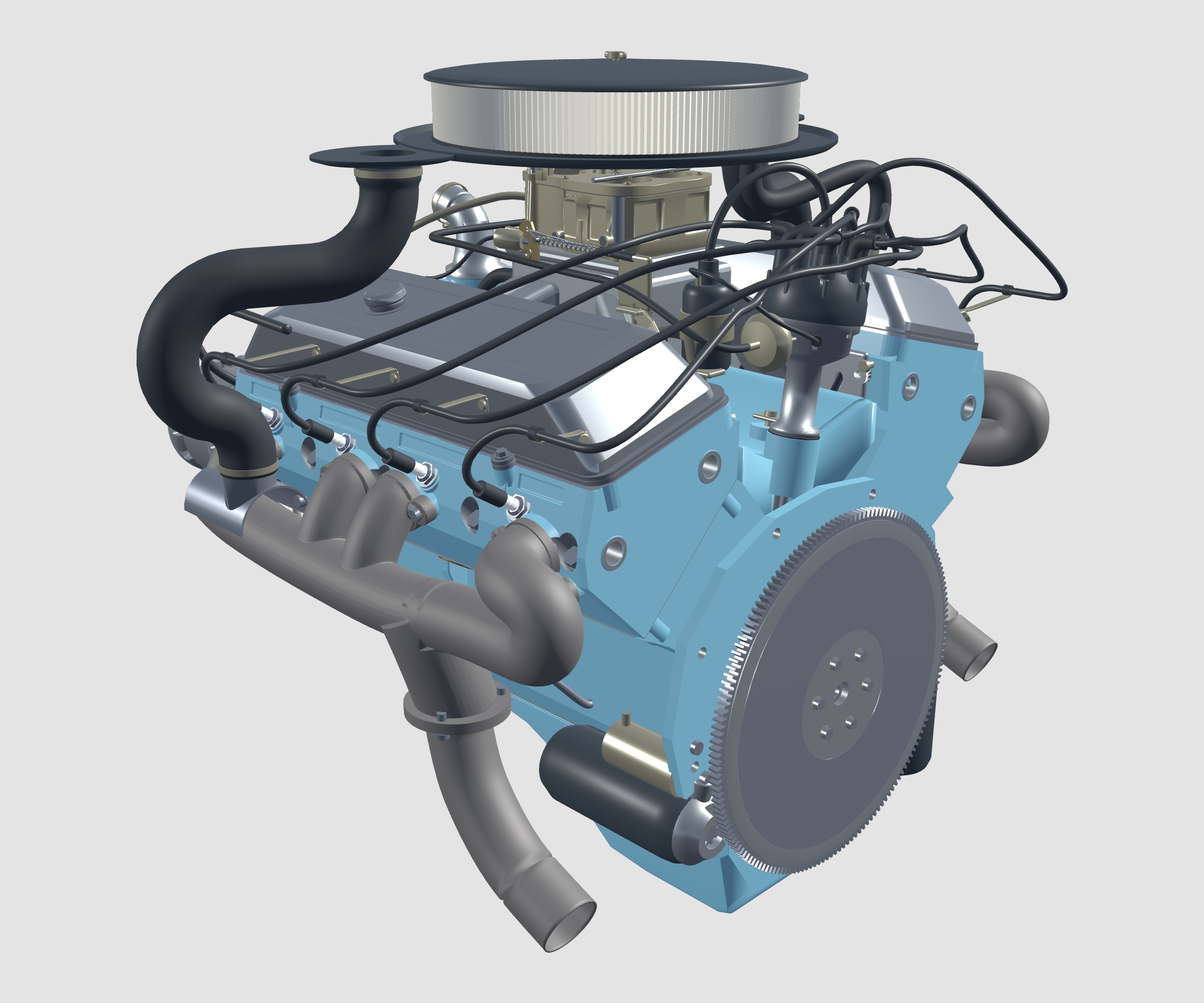 Image 2 of 8
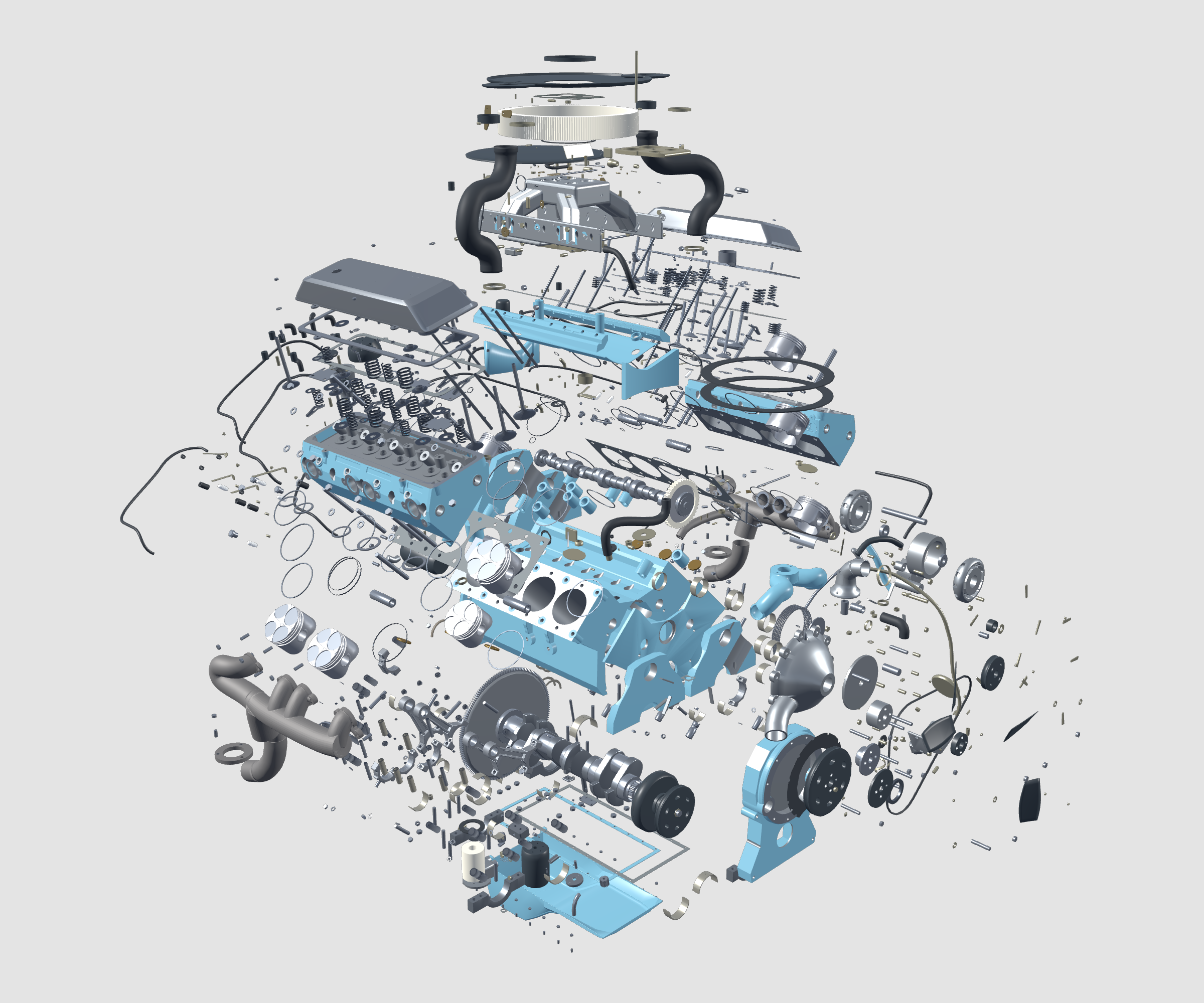 Image 3 of 8
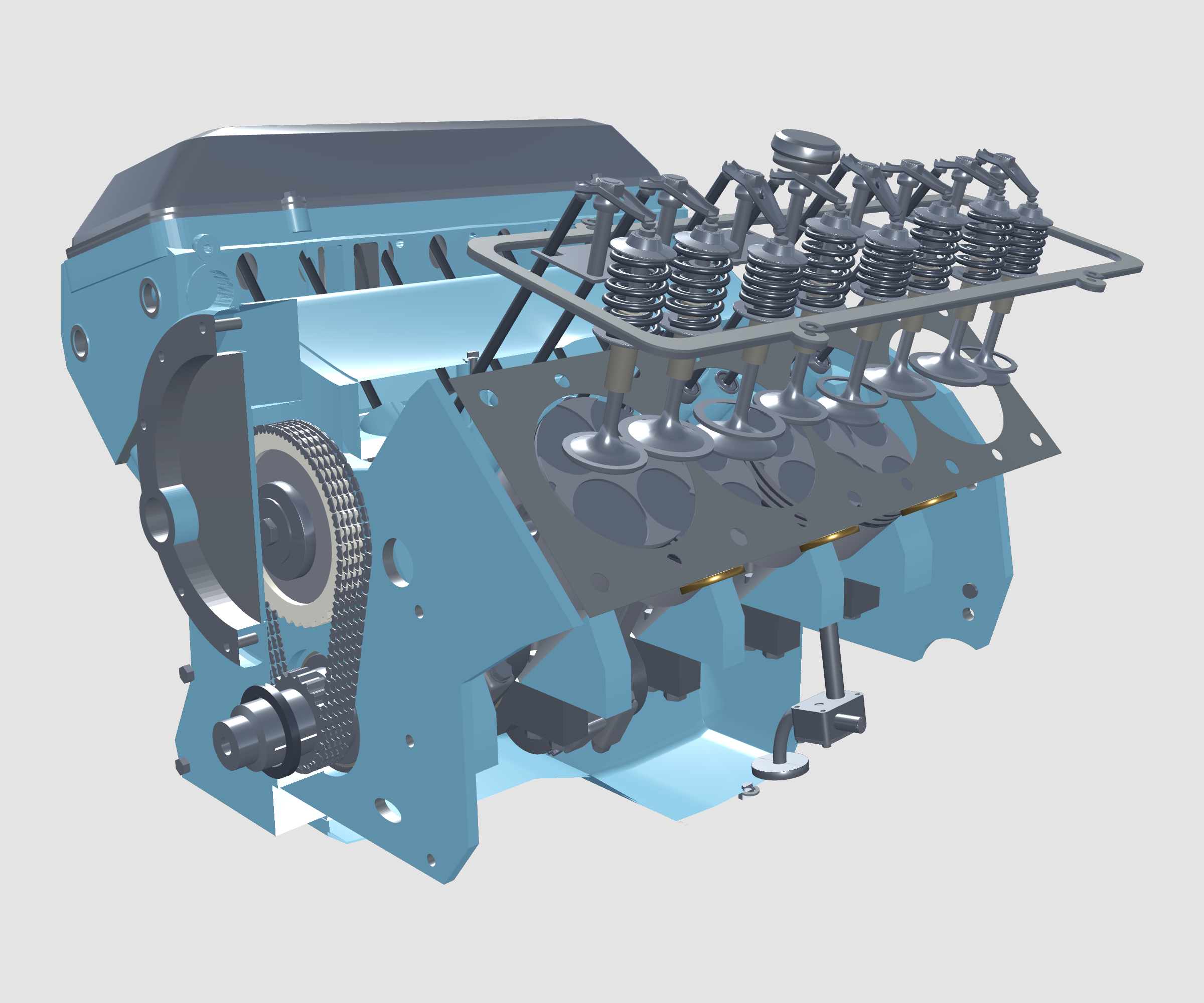 Image 4 of 8
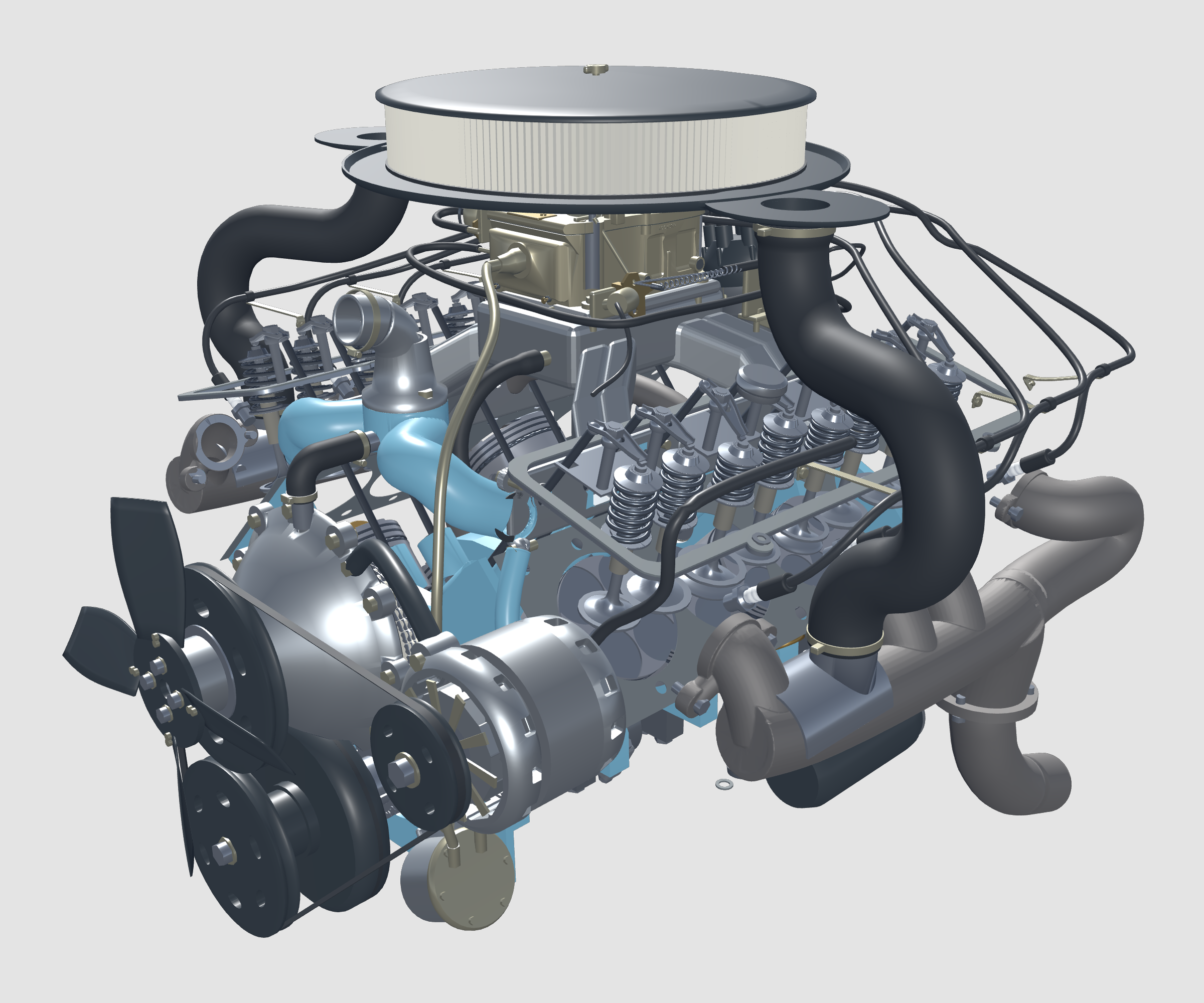 Image 5 of 8
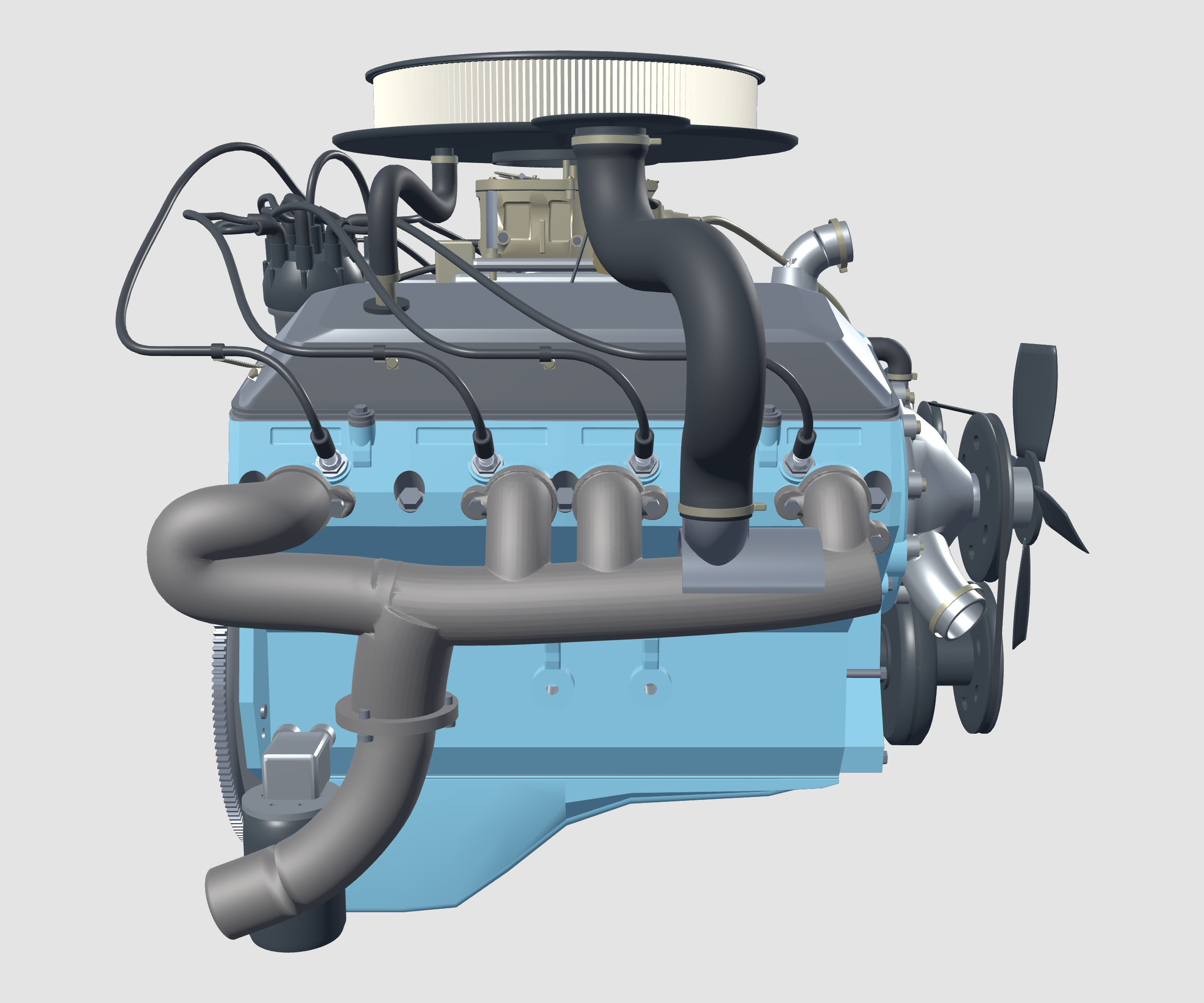 Image 6 of 8
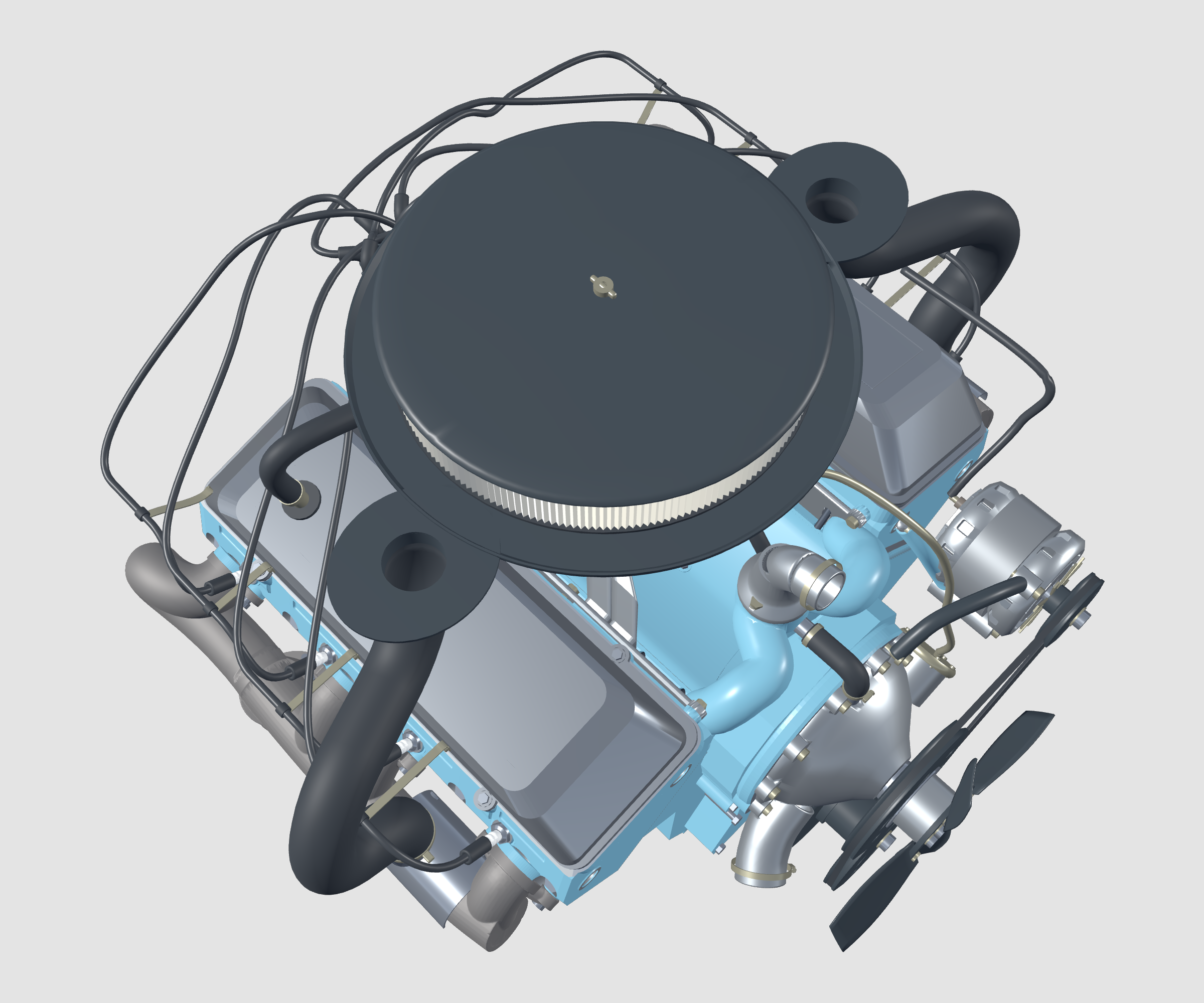 Image 7 of 8
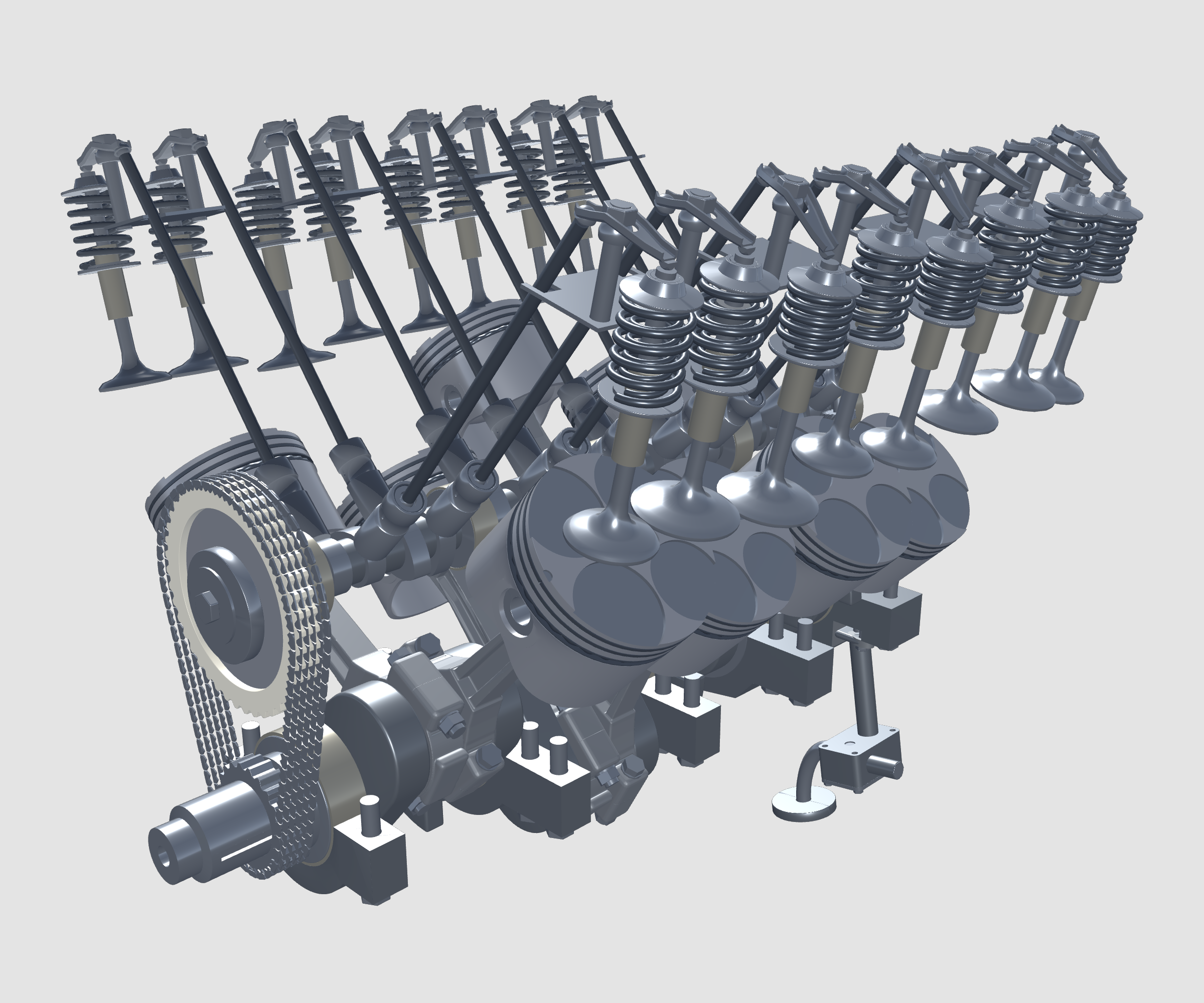 Image 8 of 8
An engine on your desktop / GE-023
Run it. Open it. Explore it.
A transparent, borderless Windows application brings the Pontiac V8 to your desktop. Orbit, pan and zoom around the complete assembly, then reveal the moving parts beneath its castings.
Interactive educational software — not a physical engine, manufacturing CAD file or video.
Orbit / Pan / Zoom
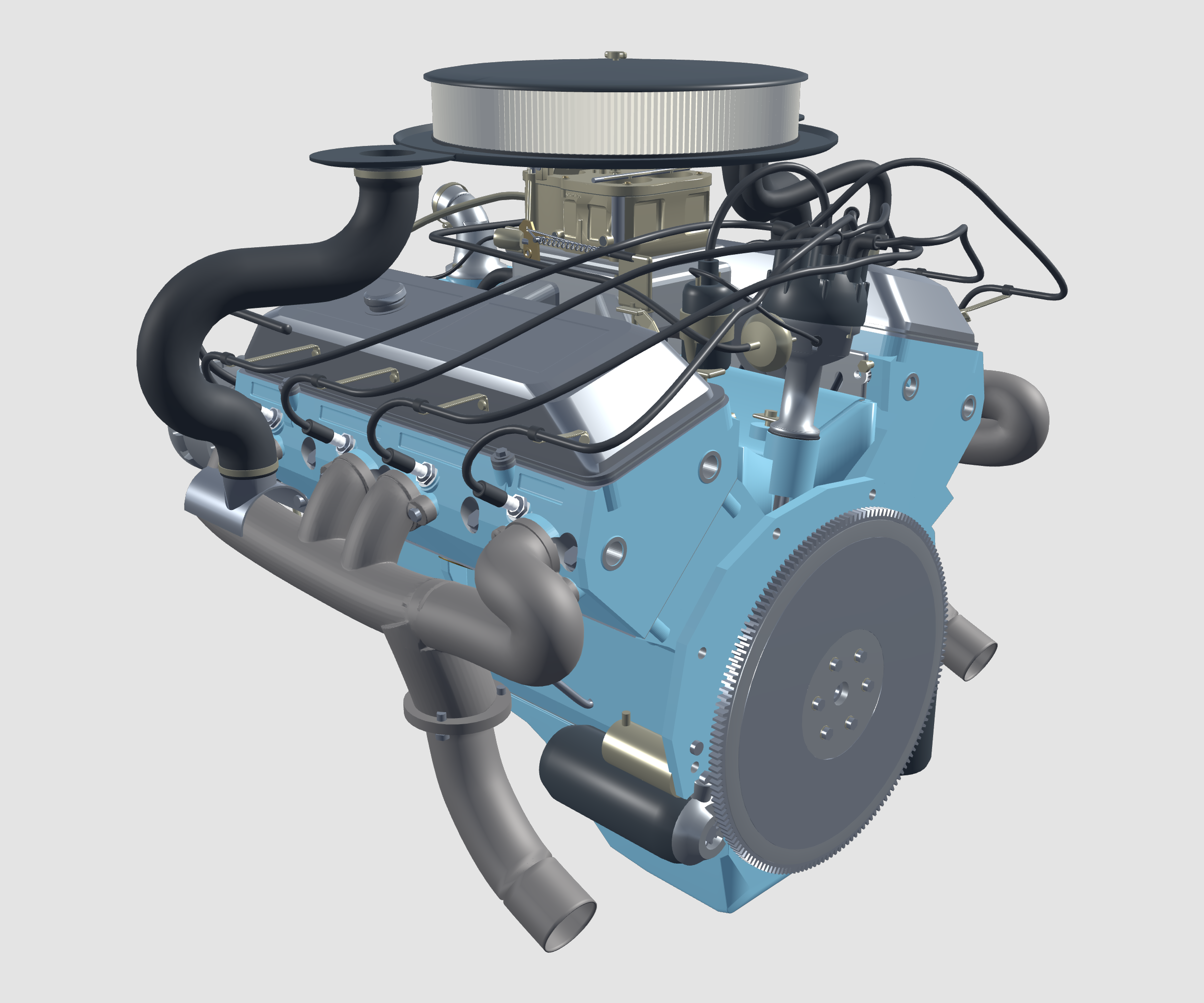
Explore the engineering
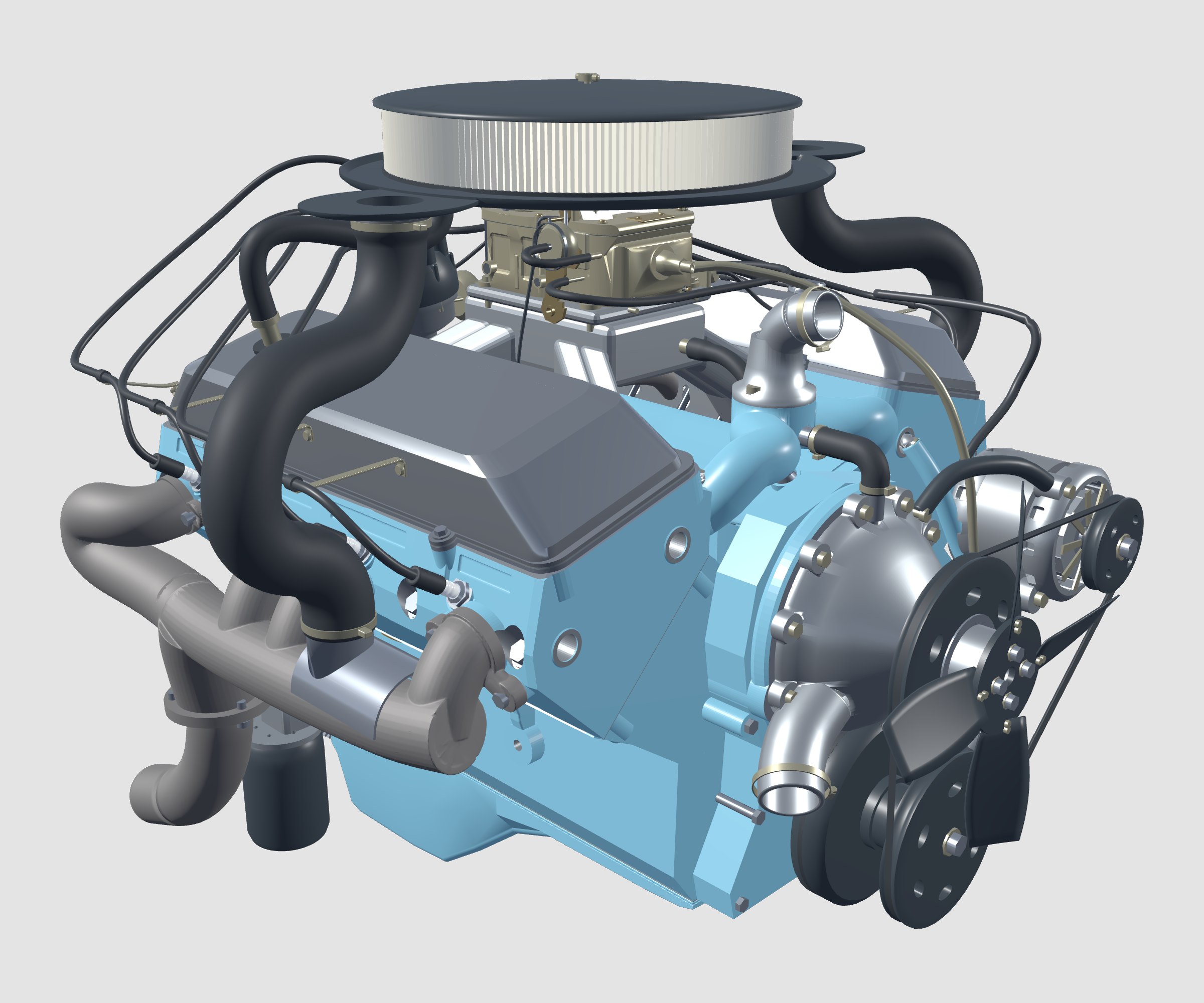
A pushrod V8, from every side.
Eight cylinders sit in two banks around a single crankshaft. The in-block camshaft operates the valves through hydraulic flat tappets, pushrods and rockers. The blue castings, intake, distributor and rear flywheel give useful landmarks as you orbit the engine.
Compare the complete engine with Internal and stripped Combustion inspection to distinguish the outer equipment from the moving mechanism.
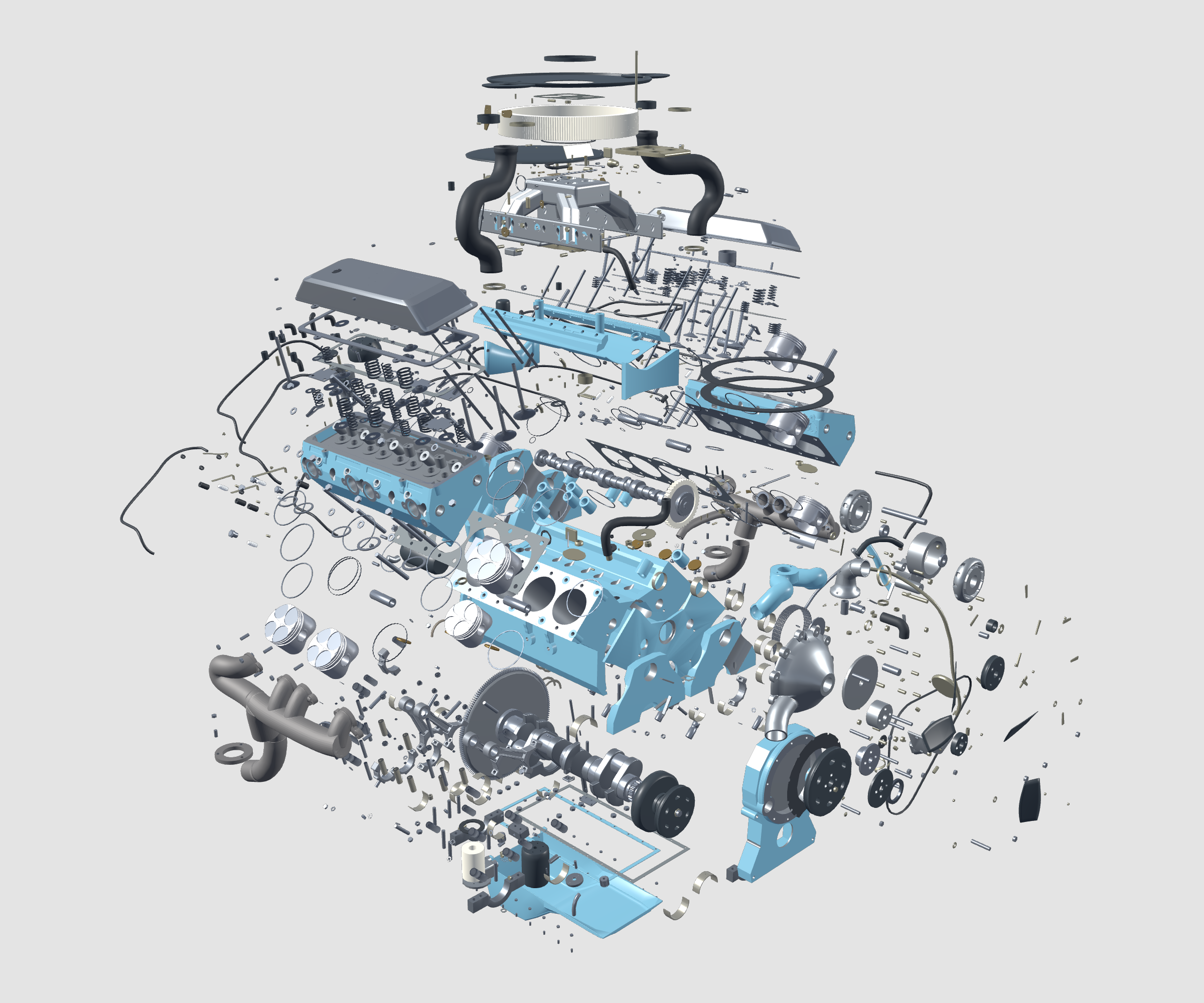
Explore the engineering
Separate the parts. Keep their size.
The full exploded view opens the independently modeled components with wide positional offsets. The crankshaft and camshaft remain cohesive, and the continuous belt and articulated timing chain remain intact.
Explode never scales the engine or its parts, changes the camera or alters the field of view. Some parts can leave your current view: pan, orbit or zoom explicitly to inspect them. Reassembly restores exact positions. This is an educational breakdown, not a service disassembly sequence.
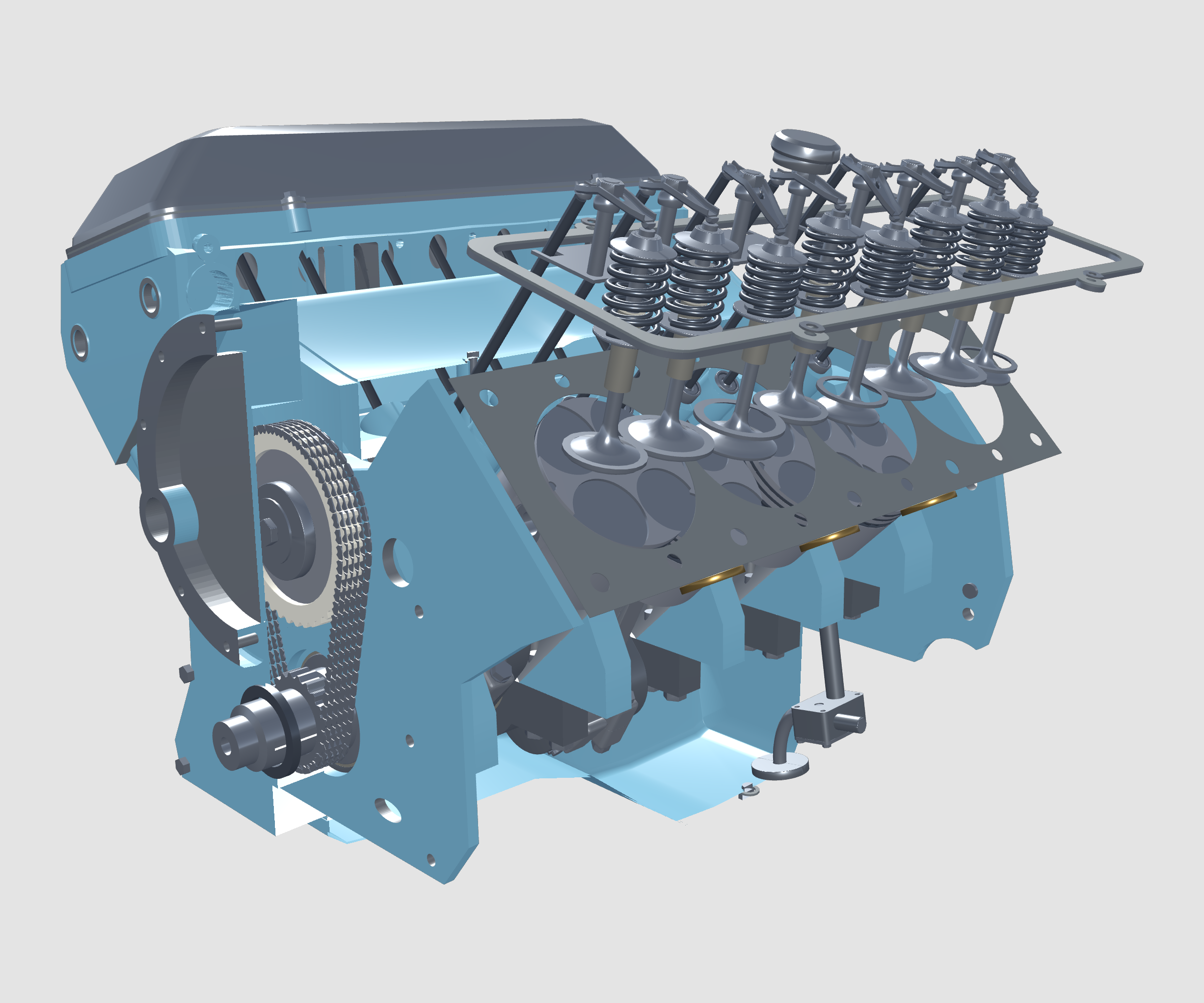
Explore the engineering
Look into the pistons and crankshaft.
Cutaway removes one side of the designated outer castings and hides the exhaust, ignition and external accessory obstructions. The view exposes the piston, rod and crank relationships without those exterior parts blocking the opening.
Run or pause the supplied motion and move the camera to inspect a chosen position. The section is a presentation tool; hidden passage geometry and casting wall thickness are not dimensionally certified.
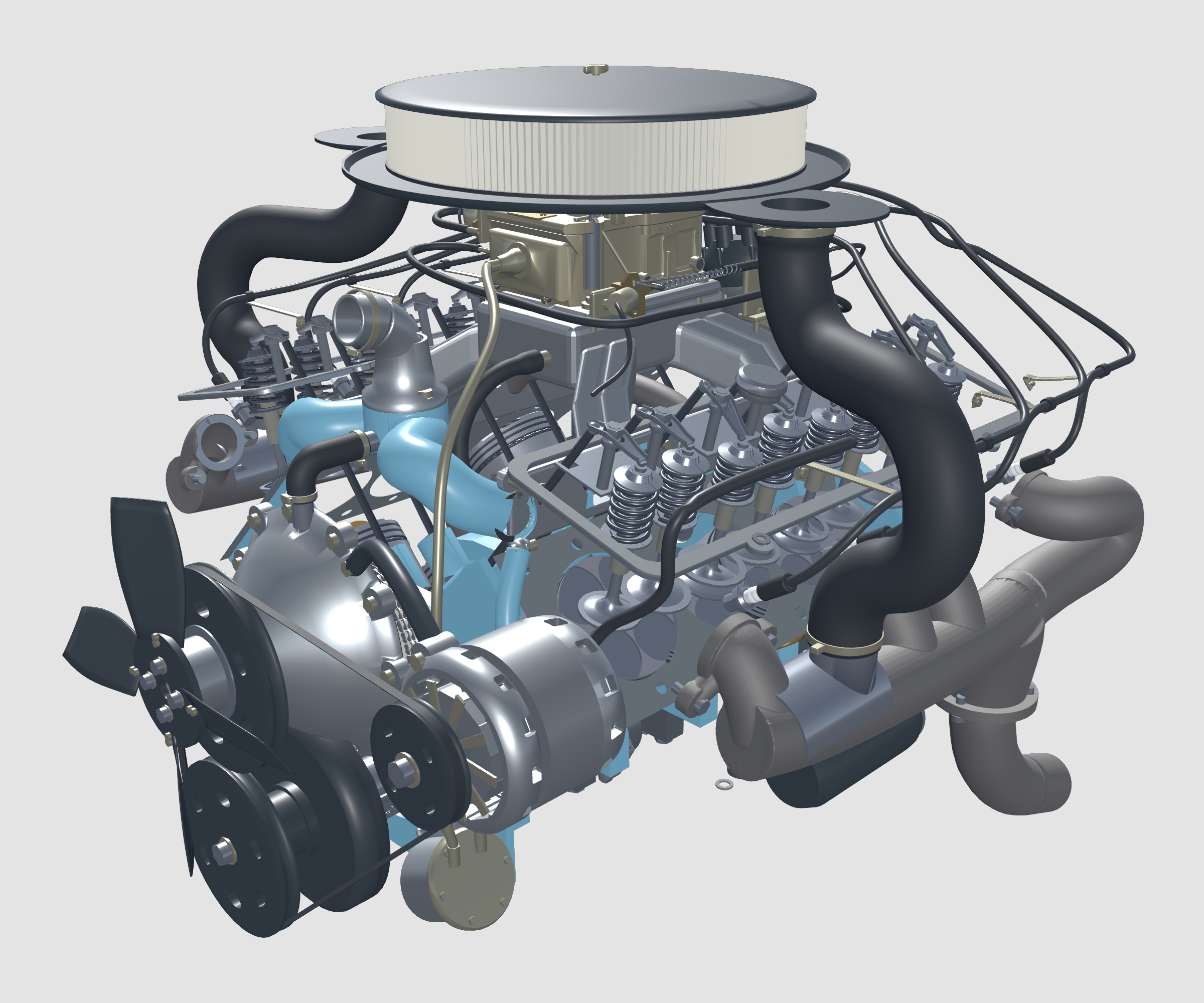
Explore the engineering
Follow the motion beneath the covers.
The internal view opens the castings around the linked mechanism. Watch the pistons move along their cylinders and the rods change angle while the crankshaft turns. Thirty-two spring morph meshes and the articulated timing-chain skin preserve the supplied animation.
The 60–2200 RPM slider controls presentation speed. Pause at a useful position or use slow playback. The animation does not calculate combustion pressure, torque or engine output; fast rotating parts can show display-sampling aliasing.
Explore the engineering
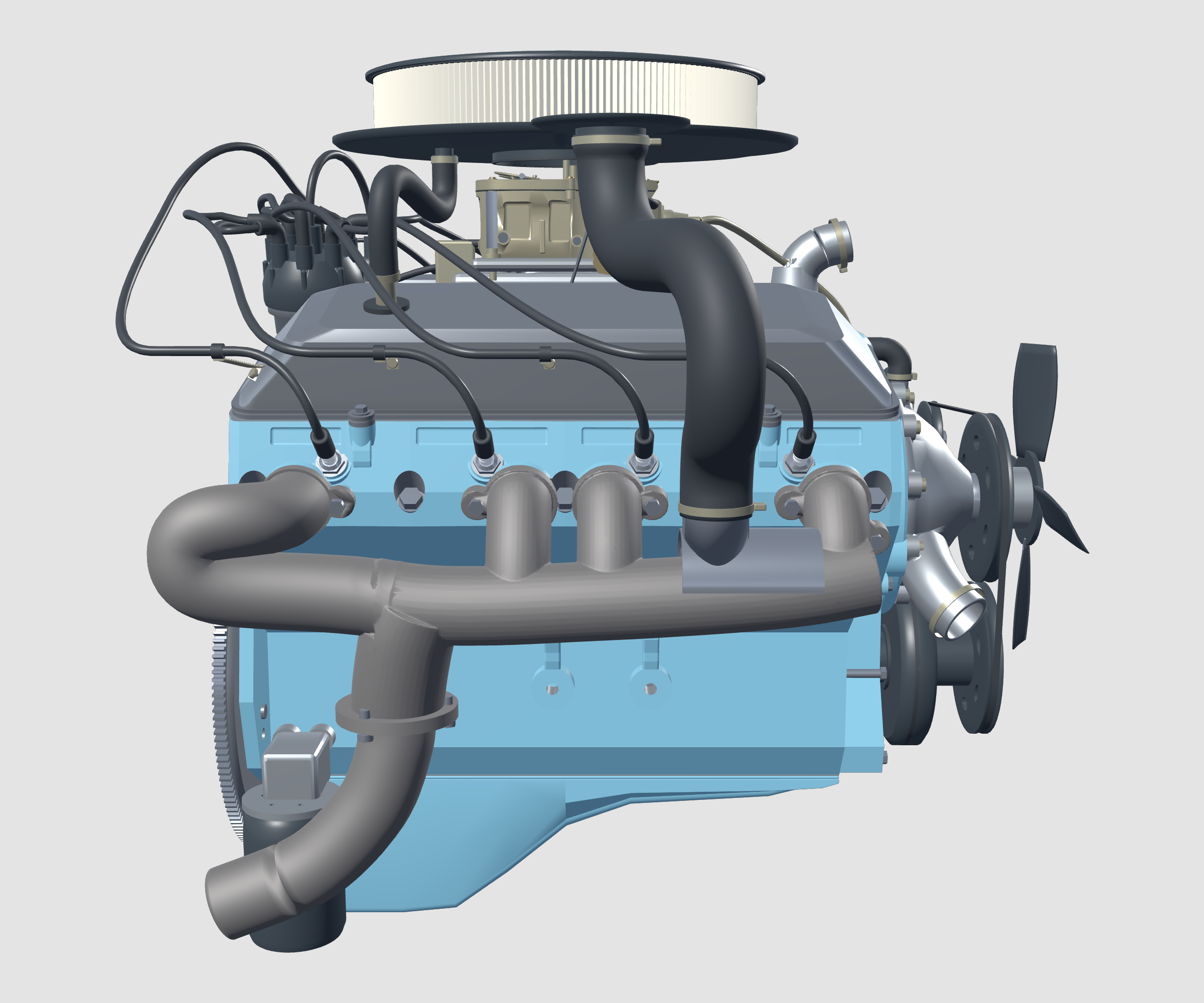
Castings, exhaust and the accessory drive.
The side view shows how the intake, ignition and exhaust surround the central V8 mechanism. Front accessories, the water-pump housing, fan, pulleys and belt retain their established mounting and drive relationships.
The updated model includes a 35-percent-smaller fan diameter and sixteen oval lightening holes across the three pulleys. These owner-requested styling details are visible rotation references, not a claim of factory pulley design or structural approval.
Explore the engineering
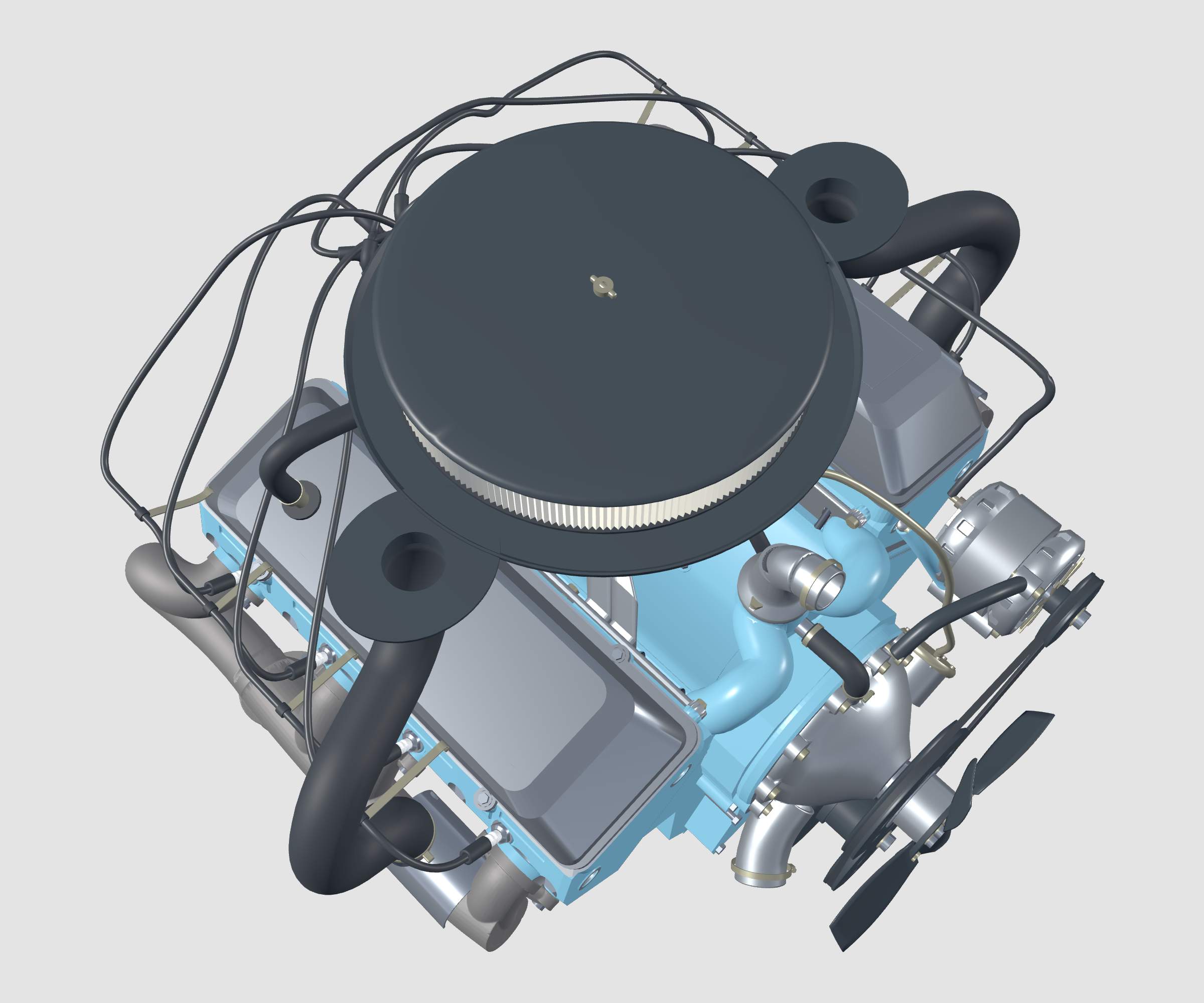
Nine finishes. Distinct materials.
Choose Original, Forest Green, White, Yellow, Red, Dark Blue, Black, Silver Grey or Bare Metal. Original restores the approved factory-inspired Pontiac appearance. Your finish preference persists between sessions.
Alternate finishes change only the designated Pontiac-blue painted surfaces, including the supplied block and head castings. Chrome, other aluminum and machined metal, rotating internals, exhaust, rubber, wiring and hardware retain their original material identities.
Explore the engineering
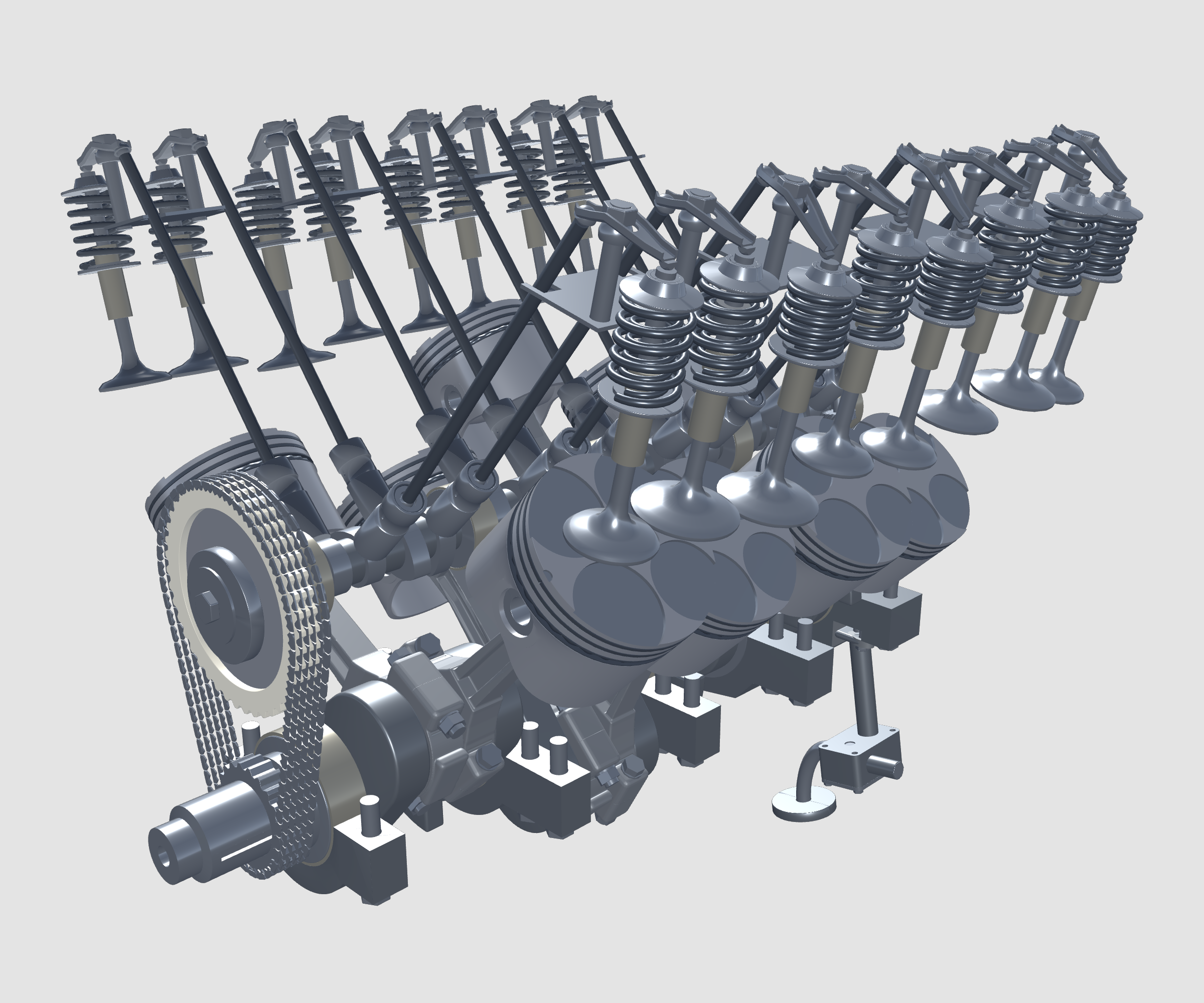
From the camshaft to the valves.
Inspect cycles through the full engine, Internal and stripped Combustion views. The third view reveals the crankshaft, pistons, rods, camshaft, hydraulic flat tappets, pushrods, rockers, valves and springs.
Explore offers four camera targets and component identification. Select a visible part for its name and explanation, then dismiss the reversible highlight. The compact two-line panel stays along the top of the application window.
Technical information / Windows download
Everything you need to get started.
Windows digital download — $35.00 USD. GE-023 V1.0. Portable ZIP: 141.48 MB.
Controls and Windows compatibility
Click the engine to reveal controls. Left drag places the desktop window; middle drag or arrows orbit; right drag pans; wheel or +/− zooms. Shift gives fine keyboard navigation. E: Explode. C: Cutaway. I: Full / Internal / Combustion inspection. R: Reset. L: placement lock. Home: Recover. Explore provides four camera targets and part identification.
The application runs behind ordinary windows on your desktop; minimize them to see it. The 60–2200 RPM slider controls animation presentation speed, not a certified factory operating range. Tested on Windows with NVIDIA RTX 3050; no universal hardware or performance guarantee is claimed.
Download and first launch
Download the Windows ZIP after checkout and extract the complete folder to a writable location. Launch Pontiac400_V8_Owner_Test.exe; the tested internal executable filename is retained. Keep the matching .pck and DesktopEngineHost.exe together. No Blender or Godot installation is needed, and this portable version does not require an installer.
The application is unsigned; no code-signing or universal compatibility claim is made. Contact Wolfgang Engineering if you need help with your download.
Historical identity and educational scope
1968 Pontiac 400 V8 is the owner-selected product name. The accepted reconstruction uses a 1969 Pontiac 400 Ram Air IV reference basis, including its selected carburetor application. It is not a claim of exact 1968 factory specification or parts interchangeability. The smaller fan and oval pulley holes are owner-requested styling.
The historical Pontiac 400 family uses a 400-cubic-inch, 90-degree V8 layout, cast-iron block and heads, an in-block camshaft and pushrod valve operation. Ratings vary by year and application; this educational software does not simulate factory power or torque.
Educational reconstruction, not factory CAD, repair instructions, parts-ordering data, dimensional certification or fabrication guidance. The accepted V1 bank-stagger/block-casting limitation remains for future V2 improvement. Manufactured forms, hidden passages and routing include approximations. Carburetor throttle and choke controls are static. Upper/lower radiator hoses and the external fuel-supply boundary hose are absent by owner approval; engine-side connections remain. Radiator, fuel tank and chassis harness are outside the engine model. No engine-sound, combustion-force or fluid-flow simulation is supplied.
Historical references: Pontiac’s 1967 Firebird 400 factory literature · 1968 Pontiac AMA engine specifications · 1969 Pontiac factory specifications for the reconstruction’s reference basis. Photographs on this page are new captures of the Wolfgang Engineering model.
Product support · Contact Wolfgang Engineering · Engine Library